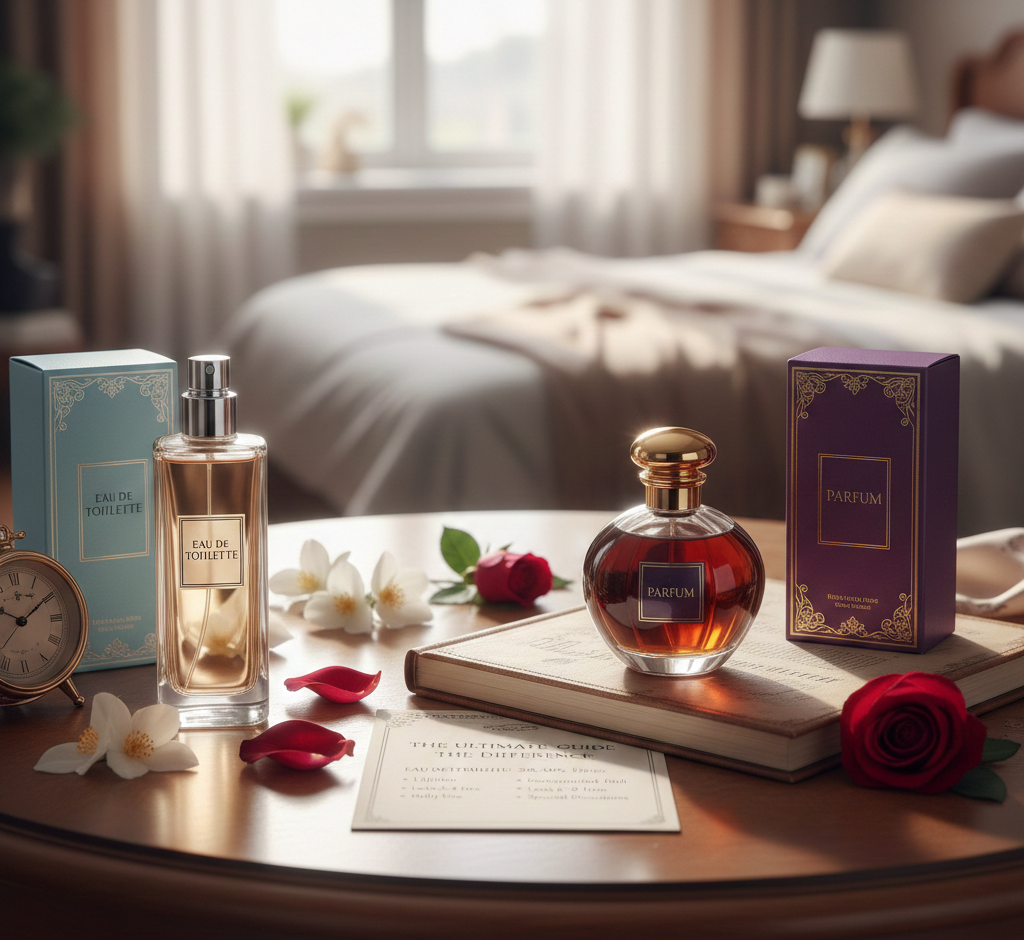
Fragrances are a woman’s best friend; however, choosing the perfect one can feel like a daunting task. Whether you are selecting a scent for your own wardrobe or searching for the ideal gift, the process often requires significant research.
When searching for a scent, most individuals look for a signature fragrance, one that embodies their true personality and adapts seamlessly to different occasions and seasons. It should feel personal, a scent that truly represents you. Finding a great perfume involves understanding its different types, recognizing personal preferences, choosing the right settings, and learning about fragrance notes and intensity. To discover an ideal match, one must first develop a basic understanding of the difference between Eau de Toilette and Parfum sprays.
When you consider buying a new perfume, you may encounter a variety of complex terms that feel overwhelming. Many of these terms refer to seemingly similar scents, such as Eau de Toilette and Parfum, yet they carry profound differences. These differences directly affect how long a fragrance lasts on your skin after you spray it.
In this guide, we will explore the importance of fragrance concentrations and help you choose the perfect one for your needs.
What Is the Main Difference Between Toilette and Parfum?
The main difference between Toilette and Parfum lies in the concentration of perfume oil mixed with alcohol. All perfumes are made using aromatic oils and a solvent (usually alcohol), which helps stabilize the scent and allows it to project properly on the skin.
Eau de Parfum (EDP)
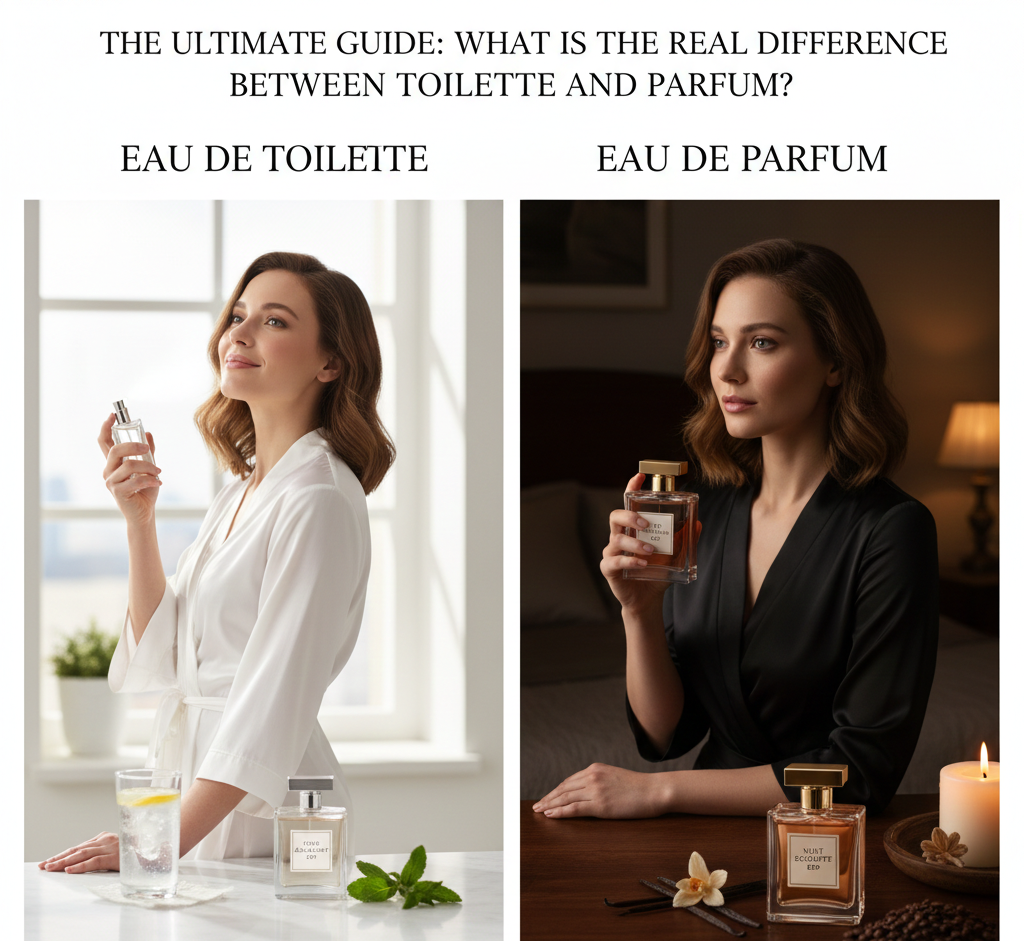
Eau de Parfum contains a higher concentration of fragrance oil, typically between 15% and 20%. Because it has less alcohol, the formula feels slightly richer and tends to last longer on the skin. EDPs are often priced higher due to their strength and longevity. This make them a good choice for those who prefer a more noticeable and long-lasting scent.
Eau de Toilette (EDT)
Eau de Toilette is a lighter formulation with a fragrance oil concentration of 5% to 15%. The term comes from the French phrase “faire sa toilette,” referring to daily grooming. EDTs are designed to be fresh and easy to wear, making them suitable for everyday use and warmer weather.
Longevity and Staying Power
One of the easiest ways to understand the difference between Eau de Toilette andEau de Parfum is by noticing how long each one lasts on the skin.
Parfum Performance:
Because Eau de Parfum contains a higher concentration of fragrance oil, it evaporates more slowly. In most cases, an EDP can last anywhere from six to eight hours, sometimes even longer depending on your skin type. This makes it a reliable option for long workdays, formal settings, or evening events where you want your scent to remain noticeable without needing frequent touch-ups.
Toilette Performance:
Eau de Toilette has a higher alcohol content, which allows the fragrance to feel lighter and more immediately noticeable when applied. However, this also means it fades faster. Most EDTs typically last around three to five hours on the skin. If you’re wearing it throughout the day, a quick reapplication may be needed to keep the scent fresh into the evening.
Overall, the choice comes down to whether you prefer a longer-lasting fragrance or a lighter scent that’s easy to refresh.
Do They Actually Smell the Same?
It’s a common misconception that Eau de Toilette is simply a diluted version of Eau de Parfum. In reality, that’s often not the case. Many perfumers intentionally adjust the formula for each version so that the fragrance expresses itself differently, rather than just more or less intensely.
The Role of Fragrance Notes
Every fragrance is built in layers, known as top, heart, and base notes, and each layer plays a specific role in how the scent unfolds over time.
Top Notes:
These are the first impressions you notice right after applying a fragrance. They are usually light and fresh, such as citrus or soft fruity notes.
Heart Notes:
Often referred to as the core or “personality” of the scent, heart notes emerge once the top notes fade. These commonly include floral, spicy, or aromatic elements.
Base Notes:
Base notes are what stay with you the longest. They provide depth and warmth, with ingredients like musk, amber, and woods.
In an Eau de Toilette, perfumers often highlight the top notes. This creates a brighter, fresher feel that is easy to wear daily.
In contrast, an Eau de Parfum emphasizes the heart and base notes. This results in a scent that feels richer and warmer as it develops on your skin.
These intentional changes give each version its own unique character. One isn’t just a weaker version of the other; they are crafted to tell different stories.
Price vs. Long-Term Value
At the checkout counter, Eau de Toilette usually comes with a lower price tag, which can make it seem like the better deal at first glance. However, many experienced fragrance buyers look beyond the upfront cost and consider the cost per wear.
With an Eau de Parfum, just two sprays are often enough to last most of the day. An Eau de Toilette, on the other hand, may need to be reapplied several times sometimes six or seven sprays throughout the day to keep the scent noticeable. As a result, an EDT bottle tends to be used up much faster.
When you look at it this way, a Parfum can actually offer better value over time. If you prefer a fragrance that lasts without frequent reapplication, investing in an Eau de Parfum often makes more sense in the long run.
How to Choose the Right One for You
Choosing between Eau de Toilette and Eau de Parfum often comes down to your surroundings and the time of year. Both have their place, and knowing when to wear each can make a noticeable difference in how the fragrance feels on you and to others.
When to wear Eau de Toilette
Spring and Summer:
Lighter, citrus-based EDTs feel fresh and comfortable in warm weather, rather than heavy or overpowering.
The Workplace:
In offices or shared spaces, a softer scent is usually more appropriate and considerate, especially when people are working close to one another.
Everyday Activities:
For casual outings or daily errands, EDT offers a clean, put-together feel without seeming too formal.
When to wear Eau de Parfum
Autumn and Winter:
Richer fragrances perform better in colder weather, as deeper notes tend to last longer and project more evenly.
Special Occasions:
Events like weddings, dinners, or formal gatherings call for a scent that can carry through the entire evening without fading.
Sensitive Skin:
Because Eau de Parfum generally contains less alcohol, it can be gentler and less drying for those with sensitive skin.
Ultimately, the best choice depends on your lifestyle, comfort, and the impression you want your fragrance to leave.
Summary Table: EDT vs. EDP
| Feature | Eau de Toilette (EDT) | Eau de Parfum (EDP) |
| Oil Concentration | 5% – 15% | 15% – 20% |
| Longevity | 3 – 5 Hours | 6 – 8 Hours |
| Intensity | Light & Fresh | Deep & Rich |
| Best Used For | Daytime / Summer | Night / Winter |
Final Thoughts
Choosing between Eau de Toilette and Eau de Parfum isn’t just about the science. It’s about how you want to feel when you walk into a room and the memory you leave behind. As we’ve seen, the difference between toilette and parfum is about much more than just the price tag on the bottle. It’s about how long that scent dances on your skin and how it evolves from that first morning spray to the very last linger.
Think of Eau de Toilette as your refreshing morning ritual. It’s light, airy, and never tries too hard. It’s that bright, energetic burst perfect for a busy office or a relaxed Sunday brunch. On the other hand, Eau de Parfum is for the woman who loves a bit of depth. It’s a commitment. It matures as the day goes on, slowly revealing hidden layers of warmth and sophistication.
There really is no “better” option only the one that fits your mood right now. Many women find that a great fragrance wardrobe needs both. You might reach for a sparkling EDT on a hot July afternoon but save that rich, velvety EDP for a rainy night or a special event.
At the end of the day, fragrance is your most personal accessory. It’s an invisible signature that speaks for you. Now that you know the secrets of concentration and longevity, you aren’t just buying a bottle. You’re choosing an experience. Trust your nose, let the scent breathe on your skin, and pick the one that makes you feel most like you.
Frequently Asked Questions
Q1- Which lasts longer, Eau de Toilette or Eau de Parfum?
Generally, Eau de Parfum lasts longer. Because it has a higher concentration of fragrance oils (15% to 20%), it typically stays on the skin for six to eight hours. Eau de Toilette has more alcohol and less oil, so it usually fades after three to five hours.
Q2- Is Eau de Parfum better than Eau de Toilette?
Neither is “better” they just serve different purposes. An EDT is great for a light, refreshing scent during the day or in hot weather. An EDP is ideal if you want a deep, complex fragrance that lasts from morning until night without reapplication.
Q3- Can I wear Eau de Parfum during the day?
Absolutely! While EDPs are richer, many women wear them as their daily signature scent. If you find your EDP too strong for the office, try spraying it once in the air and walking through the mist for a lighter application.
Q4- Why does my Eau de Toilette smell different than the Parfum version?
The difference between toilette and parfum isn’t just about strength. Perfumers often tweak the recipe. They might add more citrus to an EDT to make it “sparkle” and more vanilla or wood to an EDP to make it “sultry.”