
If you’ve ever wondered why so many people are talking about The zero waste lifestyle, here’s the thing: it’s not just another eco-trend floating around the internet. It’s a practical shift that ordinary people can actually manage without flipping their entire life upside down.
You don’t need to throw away every piece of plastic you own, fill your home with glass jars, or commit to producing a year’s worth of trash that fits inside your fist. That’s the extreme version people love to post about online, but real zero waste is more grounded than that. It’s about small, intentional choices that slowly reshape how you consume, how you live, and how you interact with the world around you.
At the heart of it, the lifestyle is simple: reduce what you throw away, reuse what you can, and look at everyday decisions through a more mindful lens. Once you understand that, everything else starts to fall into place.
What The Zero Waste Lifestyle Actually Means
At its core, The zero waste lifestyle is about reducing how much trash ends up in landfills. We’re so used to grabbing disposable products plastic cups, takeout containers, paper towels—that we often don’t notice how quickly they pile up. Zero waste flips that habit on its head.
Instead of relying on single-use items and constant consumption, the lifestyle encourages choices like:
Mindful consumption
This means thinking before buying. Do you really need that new item? Is there a reusable version? Can you repair what you already have? Mindful consumption doesn’t tell you to stop buying things—it just pushes you to buy with intention rather than impulse.
Reuse, repair, recycle, rot (the “5Rs”)
These five actions guide almost every zero-waste habit.
- Refuse what you don’t need.
- Reduce what you can live without.
- Reuse what’s already functional.
- Recycle what can be processed correctly.
- Rot (compost) the organic waste that would otherwise end up in the trash.
Think of it as a roadmap for living lighter.
Choosing reusable items over disposables
Simple swaps go a long way—metal water bottles, cloth tote bags, glass jars, beeswax wraps, and refillable containers are all staples in zero-waste homes. The goal isn’t perfection; it’s consistency.
Buying in bulk or package-free
More stores now offer bulk food sections or refill bars for soap, detergent, shampoo, and cleaning essentials. Buying in bulk cuts down on packaging and often saves money.
Supporting eco-friendly and sustainable living practices
This might mean shopping from small businesses, choosing companies with ethical manufacturing, or simply supporting local farmers’ markets.
Together, these habits naturally align with:
- minimalism
- an eco-friendly lifestyle
- plastic-free living
- low-waste habits
And the best part? These shifts don’t make life harder. They make it simpler.
So now that we’ve broken down the “what,” let’s talk about the “why.”
Why The Zero Waste Lifestyle Matters
1. It Cuts Down on Plastic Pollution
Here’s the reality most people don’t realize: the majority of plastic you toss into the recycling bin never gets recycled. It’s cheaper for manufacturers to create new plastic than to continually process old plastic, which means a huge portion of your waste ends up in landfills, waterways, and oceans.
By switching to plastic-free alternatives, like reusable bags, bottles, and containers, you instantly shrink your environmental footprint without dramatically changing your routine.
Every small shift—grabbing your reusable bags before heading to the store or refilling your bottle instead of buying a new one—helps slow down the stream of single-use plastics entering the environment.
LSIs included:
plastic-free lifestyle, reusable containers, reusable bags, eco-friendly lifestyle
2. It Makes Your Home Healthier
A zero-waste home naturally leans toward simpler, cleaner products. When you cut back on disposable wipes, chemical-heavy cleaners, and synthetic fragrances, you create a space that feels fresher and safer.
Instead of stocking up on bottles of chemical cleaners, people often switch to natural cleaning products like:
- vinegar
- baking soda
- castile soap
- essential oils
These ingredients tackle the same tasks but without the harsh additives that cause skin irritation, headaches, or allergies.
The impact is bigger than you might expect. A more natural, eco-friendly home means:
- fewer toxins in the air
- fewer allergens on surfaces
- safer environments for kids and pets
- better indoor air quality
You end up with a living space that supports your health—not one that quietly works against it.
LSIs included:
natural cleaning products, sustainable home, eco-friendly home, green home practices
3. It Helps You Save Money
People often assume that The zero waste lifestyle is expensive because they’ve seen picture-perfect kitchens filled with matching jars and high-end sustainable products. But when you strip away the Instagram-friendly aesthetic, the truth is the complete opposite.
This lifestyle helps you save money because it’s built on three simple habits:
You buy less.
You start to question impulse purchases, duplicate items, and unnecessary conveniences.
You reuse what you already own.
That jar that once held pasta sauce? It can store rice, snacks, homemade sauces, or cleaning supplies.
You repair instead of replace.
A little glue fix, a quick stitch, or a trip to a repair shop costs far less than buying something brand new.
People who adopt zero-waste habits often report spending significantly less on:
- packaged groceries
- plastic items
- disposable products
- paper towels
- single-use household items
- unnecessary “convenience” purchases
Minimalist living naturally reduces shopping urges. When you’re more intentional, you buy what you really need—not what’s marketed to you.
And the savings add up fast.

Key Principles of The Zero Waste Lifestyle
You’ll hear a lot about the 5Rs when you dive into The zero waste lifestyle. These five principles guide almost every sustainable choice. Think of them as your compass when you’re trying to live with less waste and more intention.
Refuse
This is the first—and honestly, the most powerful—step in zero waste living.
You simply say no to the things you don’t need:
- freebies you’ll never use
- plastic straws you didn’t ask for
- overly packaged products
- “just in case” purchases
Refusing cuts waste off at the source. If it never enters your home, it won’t end up in a landfill later.
Reduce
The next step is trimming down what you already own and what you bring into your life.
This is where mindful consumption, conscious consumption, and minimalism really shine.
You’re not depriving yourself—you’re removing the clutter, the excess, and the constant cycle of buying things you don’t actually need. Your space becomes calmer, your decisions become easier, and your trash naturally shrinks.
Reuse
This is the heart of zero-waste living: using what you have instead of replacing it with something new.
Swap disposables with:
- reusable bottles
- stainless-steel containers
- cloth bags
- glass jars
- second-hand items
This mindset leads straight into thrift shopping, upcycling, and participating in the circular economy, where products stay in use longer instead of being thrown away. Every time you reuse something, you’re keeping materials in circulation rather than turning them into waste.
Recycle
Recycling is helpful—but only when it’s done correctly.
Many items people toss into the bin aren’t actually recyclable, which leads to contamination and wasted resources.
The key is to learn what your specific city accepts. Some accept glass, some don’t. Some recycle certain plastics, some can’t process them at all.
When you recycle the right way, you help turn materials into new products instead of letting them pile up in landfills.
Rot
This is where you turn waste into something useful.
Composting your food scraps—banana peels, vegetable skins, coffee grounds—dramatically reduces household trash.
Even a small countertop bin or a simple backyard pile can turn organic waste into nutrient-rich compost.
This supports:
- composting habits
- organic waste compost practices
- the idea of transforming waste into value (waste-to-resource)
Together, the 5Rs make zero waste more practical and more approachable than most people expect.

How to Start The Zero Waste Lifestyle
Let’s break it down in a way that won’t overwhelm you. Zero waste isn’t about overnight perfection; it’s about small, steady changes that fit into your life.
Step 1: Start with Easy Swaps
You don’t have to reinvent your lifestyle on day one. Start simple.
Beginner-Friendly Swaps Table
| Disposable Item | Zero-Waste Swap | Why It Helps |
|---|---|---|
| Plastic bottles | Reusable bottle | Cuts single-use plastic waste |
| Paper towels | Cloth towels | More sustainable & cost-effective |
| Plastic bags | Reusable tote | Supports plastic-free lifestyle |
| Shampoo bottles | Shampoo bars | Reduces packaging waste |
| Cling wrap | Beeswax wraps | Reusable & eco-friendly |
These small swaps build momentum and make the transition easier.
Step 2: Buy in Bulk or Package-Free
Bulk shopping is one of the easiest ways to reduce packaging waste. Many grocery stores now offer:
- bulk bins for grains, nuts, spices
- refill stations for soaps and detergents
Bring your own jars or cotton bags, fill what you need, and skip unnecessary packaging.
This supports sustainable living, low-waste living, and bulk shopping practices.
Step 3: Switch to Natural Cleaning
Here’s where things get surprisingly simple.
A few basic ingredients—vinegar, baking soda, lemon, and castile soap—can replace dozens of harsh chemical cleaners. They work just as well but without the fumes or toxins.
Bonus: natural cleaning is easier on your skin, safer for kids and pets, and better for the planet.
Step 4: Reevaluate Your Bathroom Routine
Bathrooms generate more waste than people realize. From razors to cotton pads to plastic bottles, it adds up fast.
Switch to:
- bamboo toothbrushes
- reusable cotton rounds
- safety razors
- solid shampoo and conditioner bars
These swaps last longer, cost less in the long run, and drastically cut plastic waste.
Step 5: Embrace Second-Hand Shopping
You don’t always need “new.”
Thrift stores, buy-nothing groups, flea markets, and local marketplaces are goldmines for quality items.
This encourages:
- the gift economy
- reducing consumption
- keeping resources in circulation
- reusing rather than replacing
The best part? Second-hand shopping often feels more rewarding than buying new.

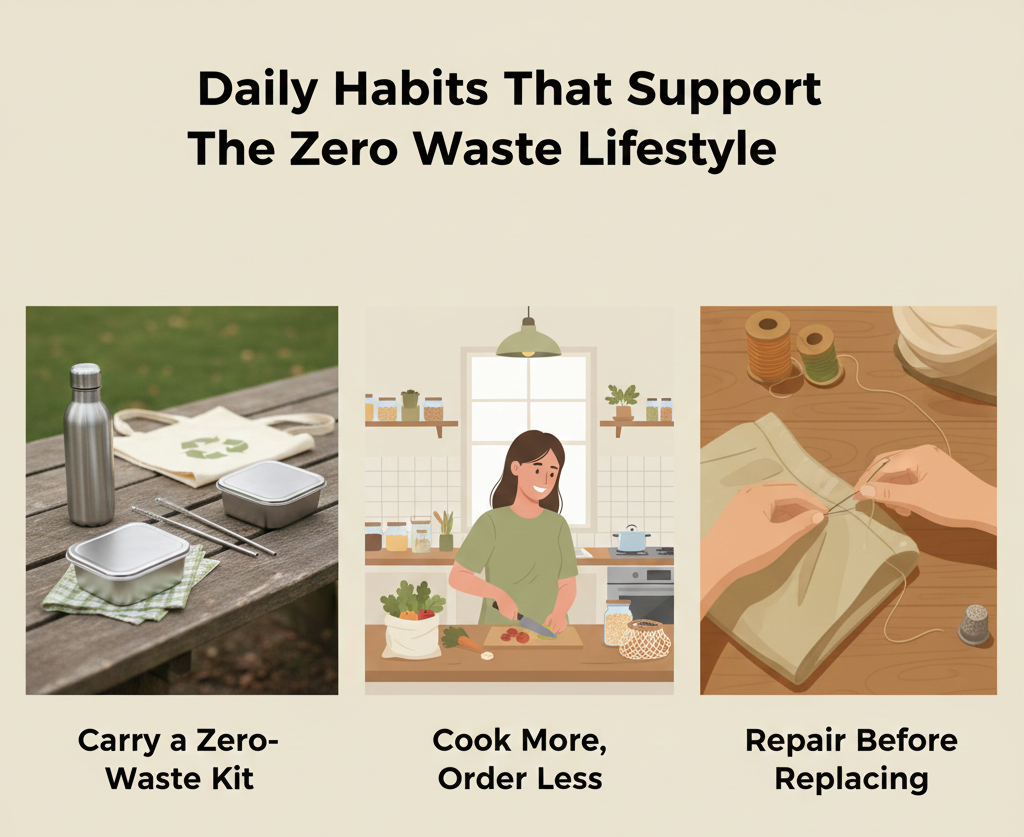
Daily Habits That Support The Zero Waste Lifestyle
Zero waste isn’t a one-time project. It’s a set of small habits that, over time, completely transform how you live.
Carry a Zero-Waste Kit
A simple kit can save you from a dozen disposable items every week. Keep it in your bag or car.
What to include:
- tote bag
- reusable bottle
- reusable straw
- food container
- cloth napkin
When you’re eating out, grabbing coffee, or traveling, this kit keeps you prepared and helps you avoid unnecessary waste.
Cook More, Order Less
Takeout containers, plastic cutlery, and food packaging generate a surprising amount of trash.
Cooking at home helps you:
- reduce waste
- use fresher ingredients
- save money
- support resource conservation
- avoid mountains of packaging
Batch cooking, meal prep, and leftovers all make zero waste easier.
Repair Before Replacing
A tiny repair can extend an item’s lifespan by years.
Whether it’s sewing a loose button, fixing a wobbly chair, or visiting a local repair shop, these small habits support:
- minimal consumption
- resource conservation
- a more sustainable mindset
Every repaired item is one less item in a landfill
The Zero Waste Lifestyle for Families
Families don’t need to overhaul everything at once — they just need intention. Kids actually adapt faster than adults when it comes to eco-friendly habits. They love being involved, and when you turn sustainable living into something hands-on, it becomes part of their everyday thinking.
You can teach kids:
- eco values
- hands-on learning
- creativity
- unplugged play
- responsibility
What this really means is that you’re shaping habits early. When children learn to sort recycling, carry their own reusable bottle, or help with composting, those actions become second nature. And honestly, it builds confidence — kids love knowing they’re “helping the planet.”
Simple family-friendly ideas:
- Keep a “reuse box” for craft supplies
- Let kids pick their own reusable lunch containers
- Turn off screens and try unplugged activities like outdoor play, DIY projects, or gardening
- Make composting fun by letting them toss in food scraps
Small steps create a long-lasting mindset, and that’s the real win.
Is The Zero Waste Lifestyle Expensive?
Short answer: no. Zero-waste living isn’t about replacing everything with fancy, aesthetic eco-products you see online. You don’t need curated jars, bamboo sets, or matching pantry containers.
Here’s the truth:
You don’t buy your way into zero waste — you simply shift how you use what you already own.
The genuine zero-waste lifestyle encourages:
- repairing
- reusing
- buying second-hand
- avoiding impulse purchases
Most people actually save money because they stop overbuying and focus on essentials. The expensive part comes from optional “Instagram-friendly” sustainable items, which are nice but never required.
Start slow, replace only when needed, and your budget will thank you.
Realistic Expectations: You Don’t Need to Be Perfect
Here’s the honest part — nobody is 100% zero waste. Not in this economy, not with modern packaging, not even experts who live off-grid.
Everyone creates some trash.
The goal isn’t perfection; it’s progress.
Some weeks you’ll forget your tote bag, or you’ll buy something plastic because you needed it. That’s normal. What matters is that you try again tomorrow. Think of this lifestyle as a long-term habit, not a strict rulebook.
Give yourself permission to start where you are. Tiny improvements stack up over time — and that’s how real change happens.
Benefits of The Zero Waste Lifestyle
Environmental Benefits
- Less plastic pollution
- Lower carbon footprint
- Cleaner oceans
- More sustainable communities
Every small shift — skipping a plastic bag, choosing reusable containers, composting scraps — reduces the strain on landfills and ecosystems. Collectively, these actions create cleaner, healthier environments for everyone.
Personal Benefits
- More savings
- Less clutter
- Healthier home environment
- Better mental clarity
Living with intention feels good. You buy less, waste less, and end up with a calmer, simpler space. Many people also notice fewer chemical exposures and a more organized home.
Community Benefits
- Supporting local markets
- Reconnecting with nature
- Creating a shared culture of sustainability
Zero-waste living builds stronger community habits. When you shop local, join a refill station, or share resources with neighbors, you’re helping create a culture that values sustainability and cooperation.
External Resource
If you want deeper, practical, and globally recognized guidance, explore the zero-waste and sustainability resources at EarthDay.org. It’s a reliable platform offering step-by-step tips, environmental education, and simple actions you can apply immediately.
Final Thoughts
The truth is, The zero waste lifestyle isn’t about perfection, filters, or being “eco enough.” It’s simply about being intentional — choosing reusables when you can, reducing what you don’t need, and building habits that make daily life smoother, lighter, and more mindful.
Start small. Swap one item at a time. Let changes feel natural, not forced.
Before long, your home will feel more organized, your costs will drop, and your footprint will shrink — all without sacrificing comfort or convenience.





1 thought on “Why Everyone Talking About The Zero Waste Lifestyle”