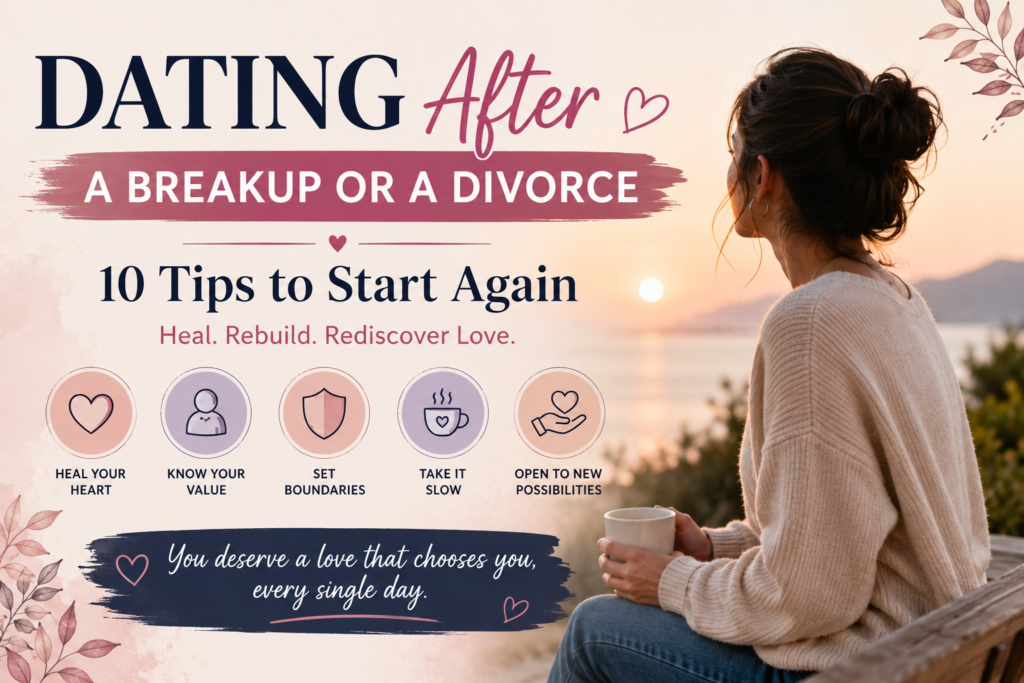
Let’s be real. The moment you decide to Date After a Breakup or a Divorce, it doesn’t feel empowering at all. It feels like you’re stepping barefoot onto emotional Legos.
The questions hit fast:
- Am I really over my ex?
- How long should I wait?
- What if I attract the same person again but with better Wi-Fi and worse coping mechanisms?
Before you uninstall dating apps for the tenth time, take a breath. Yes dating again after heartbreak is scary. But it’s also a chance to heal, rewrite patterns, rebuild trust, and rediscover your confidence.
This guide blends research-based strategies, emotional readiness signs, LSI keyword insights, and real-world tips from people who’ve been there.
Why People Fear Dating Again
Fear after divorce or breakup isn’t random; it’s emotional residue. Most people worry about:
- Repeating past mistakes
- Trust after divorce
- Vulnerability after heartbreak
- Pacing your dating journey
- Rebuilding confidence
And here’s the thing: emotional readiness isn’t about time. It’s about internal healing, boundaries, and self-understanding.

Are You Ready to Date After a Breakup or a Divorce?
Signs of Emotional Readiness
Experts suggest you’re ready when:
- you’ve let go of bitterness
- your ex doesn’t run your thoughts
- you see the past objectively
- you can trust someone new
- you’re excited not terrified by connection
A quick emotional readiness checklist
Ask yourself:
- Can I communicate boundaries without guilt?
- Am I looking to connect, not fill a void?
- Do I take responsibility for my part in the past relationship?
- Can I tolerate uncertainty without spiraling?
If most answers lean yes, you’re likely healing from heartbreak in a grounded way.
How Long Should You Wait to Date After a Breakup or a Divorce?
Research suggests averages ranging between months to years, but there’s no universal timeline.
What really matters is your:
- grieving process
- emotional preparedness
- healing timeline
- relationship goals
A therapist once joked, “Only you know when the ghost of your ex stops whispering into your Google search bar.”
Translation: don’t rush. Take a slow approach to dating.
Why It’s Helpful to Reflect Before You Date After a Breakup or a Divorce
Reflection builds resilience.
Here are questions to explore:
- What pattern led me here?
- Did I ignore red flags?
- What boundaries do I need in the future?
Self-reflection after breakup prevents repeating past mistakes and helps you step into dating with self-discovery and grounded confidence.
Emotional Healing Before You Date After a Breakup or a Divorce
Healing involves:
- processing guilt + grief
- releasing resentment
- rebuilding self-worth
- balancing independence and intimacy
A divorced dad I interviewed joked,
“I thought I was fine until Tinder asked me to write a bio. Then I realized I didn’t even know what my hobbies were anymore except washing kids’ lunch boxes.”
Healing helps you rediscover yourself outside the identity of being someone’s partner.

Practical Tips When You Date After a Breakup or a Divorce
1. Start Slowly
You don’t owe intimacy, commitment, or energy to anyone immediately.
Slow pacing = emotional safety.
2. Set Relationship Goals Early
Clarify whether you want:
- casual connections
- companionship
- long-term partnership
3. Build Healthy Boundaries
Examples include:
- no discussing exes on first dates
- protect emotional bandwidth
- don’t ignore red flags
4. Trust Your Gut
Your intuition improves through experience. Use it.
Using Dating Apps to Date After a Breakup or a Divorce
Dating apps are useful but overwhelming when you first return to dating.
Common challenges
- reading signals online
- ghosting anxiety
- decision fatigue
- vulnerability
Tips
- limit swiping time
- avoid comparing yourself to others
- build confidence slowly
- meet sooner rather than later
If you want to learn online safety tips, check this trusted resource
Dating With Kids or Co-Parenting After Divorce
Dating with children adds layers to emotional readiness.
Suggestions
- don’t introduce kids prematurely
- avoid secrecy
- respect co-parenting agreements
- communicate honestly
A single mom shared,
“My daughter thought dating meant someone would replace her dad. So we reshaped the story: we’re practicing friendship first.”
That level of emotional preparedness matters.
How to Avoid Repeating Past Mistakes When You Date After a Breakup or a Divorce
Patterns repeat until healed.
Here’s how to break them:
- learn attachment tendencies
- establish emotional readiness checklist
- identify red flags early
- recognize green flags too
Should You Date Casually or Seek Commitment?
There isn’t a right answer.
Casual Dating Helps
- rebuild trust gradually
- overcome fear of vulnerability
- gain experience post-divorce
Serious Dating Supports
- long-term emotional growth
- forming meaningful partnerships
Your relationship goals should align with your intention not pressure from family or friends.

Signs You’re Ready vs Signs You’re Not Ready
| Signs of Readiness | Signs You’re Not Ready |
| You processed the breakup | You talk endlessly about your ex |
| You’re emotionally stable | You need validation |
| You can set boundaries | You rush intimacy |
| You feel excited to date | You fear loneliness more |
When to Step Back from Dating
Sometimes you realize dating triggers unresolved grief.
Pause when:
- Jealousy overwhelms you
- Anxiety is constant
- You idealize partners instantly
- Trust feels impossible
Remember: pacing your dating journey is self-care, not weakness.
Real Stories From People Who Tried to Date After a Breakup or a Divorce
A Funny Disaster
A divorced man shared:
“On my first date, I accidentally called her by my ex-wife’s name. Twice. The waiter laughed so hard he spilled water on both of us.”
Lesson: don’t date before emotional healing.
A Sweet Success
A separated woman said:
“I spent a year healing. When I finally dated, it felt peaceful—not desperate.”
Healing builds confidence after breakup and makes space for healthy love.
FAQs
No fixed timeline. Emotional preparedness is key.
Yes, with boundaries and intentional pacing.
Eventually but only when commitment becomes serious.
Use reflection + boundary setting. Learning patterns prevents repetition.
Loneliness, fear, or unprocessed grief. Take it slow.
Final Thoughts
Choosing to Date After a Breakup or a Divorce isn’t a sign of weakness or carelessness—it’s a sign that you’re healing and ready for connection again.
This isn’t about finding someone better. It’s about becoming someone grounded, reflective, and emotionally prepared.
Whether you take small steps or a bold leap, go at your own pace. Build trust gradually, honor boundaries, and stay honest with yourself.
Love after heartbreak isn’t guaranteed, but growth absolutely is.