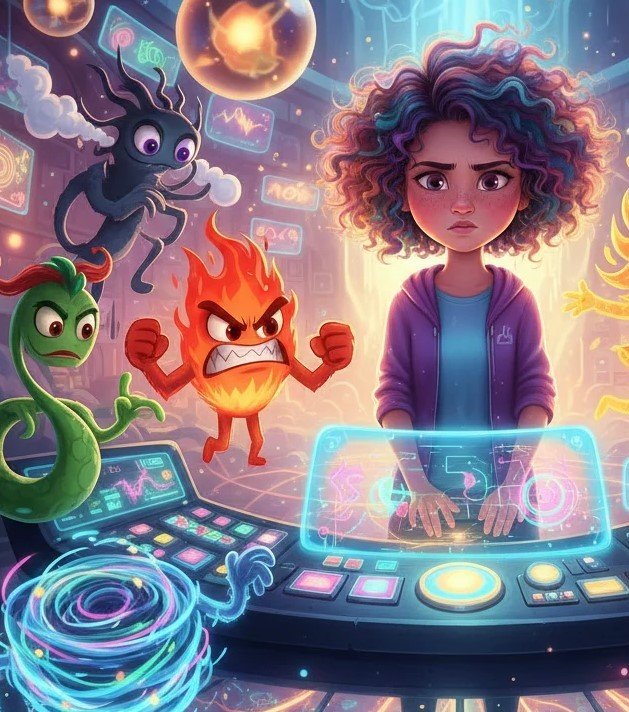
Let me tell you something as a woman: when I watched Inside Out 2, I didn’t just see Riley’s story. I saw mine., then saw my daughter’s and saw every woman I know navigating the impossible balance between what we feel and what we’re supposed to feel.
This isn’t just another animated movie. It’s a mirror held up to the emotional chaos women experience—especially during those brutal teenage years when everything changes and nothing makes sense.
Inside Out 2 characters women connect with aren’t just cute personalities. They’re the internal voices we’ve learned to suppress, manage, or pretend don’t exist. Pixar gave us permission to acknowledge them, and honestly? That’s revolutionary.
Let’s talk about why these characters matter so much—and what they reveal about the female emotional experience.
Why Inside Out 2 Hits Different for Women and Girls
Before we dive into the Inside Out 2 characters women recognize in themselves, let’s be honest about something: society teaches girls to manage everyone else’s emotions before their own.
We’re expected to be:
- Happy (but not too loud about it)
- Calm (even when we’re falling apart)
- Understanding (of everyone except ourselves)
- Perfect (while pretending it’s effortless)
Riley’s teenage journey reflects what happens when a girl enters adolescence and realizes the emotional rules have changed completely:
- Identity becomes fluid and confusing
- Peer pressure intensifies around appearance and behavior
- Self-criticism becomes a constant internal voice
- Mistakes feel catastrophic instead of correctable
- The body changes in ways that invite unwanted commentary
For women watching this film, it’s not nostalgia it’s recognition. We remember what it felt like. And for mothers watching with daughters, it’s a painful reminder of what’s coming.

Returning Emotions: How Women Experience Them Differently
The original emotions aren’t just back—they’ve evolved. And for women emotional intelligence development, understanding how these emotions function differently in female adolescence matters enormously.
Joy – Amy Poehler (The Pressure to Stay Positive)
Joy represents something women know too well: toxic positivity.
Girls are socialized to smile through discomfort, stay cheerful under pressure, and never “bring down the mood.” Joy’s struggle in this film mirrors what happens when women realize forced happiness is exhausting.
What Joy teaches women:
- Controlling emotions doesn’t make them disappear
- Suppressing sadness or anxiety creates bigger problems
- Letting go of control is terrifying but necessary
- Happiness isn’t about denying other feelings
For teenage girls especially, Joy’s journey shows that you don’t have to be okay all the time. That permission alone is powerful.
Keywords: joy leadership, emotional suppression women, toxic positivity girls
Sadness – Phyllis Smith (The Emotion Women Are Taught to Hide)
Women are often shamed for crying. We’re called “emotional,” “dramatic,” or “too sensitive” when we express sadness openly.
Sadness in this sequel becomes a quiet wisdom figure the emotion that understands Riley better than anyone else. She knows that tears aren’t weakness; they’re release.
What Sadness represents for women:
- Emotional processing without judgment
- The power of vulnerability in building connections
- Permission to grieve changes, losses, and disappointments
Teenage girls need to see that sadness isn’t something to fix or hide. It’s something to honor and move through.
Anger – Lewis Black (The “Difficult” Emotion Women Suppress)
Here’s an uncomfortable truth: girls are punished for anger in ways boys aren’t.
When boys express anger, they’re “standing up for themselves.” When girls do it, they’re “difficult,” “dramatic,” or “bitchy.”
Anger in Inside Out 2 addresses:
- Unfair treatment and double standards
- Frustration with shifting social rules
- Protection of boundaries and self-respect
For women, this emotion validates something we’ve been taught to suppress: anger is not only okay—it’s necessary. It protects us from being treated poorly and signals when our boundaries are violated.
Fear – Tony Hale (The Anxiety Girls Internalize)
Evolves from physical danger to social danger and for teenage girls, social rejection feels life-threatening.
Fear now focuses on:
- Social rejection and exclusion
- Public embarrassment and humiliation
- Future uncertainty about identity and belonging
Girls experience fear differently because the stakes feel higher. One mistake can define your social standing. One embarrassing moment can become a defining memory.
Disgust – Liza Lapira (Social Filtering and Self-Protection)
Disgust isn’t just about food anymore it’s about social disgust.
For teenage girls, Disgust becomes the emotion that:
- Filters harmful relationships
- Guards against peer pressure
- Protects reputation and self-image
Women watching recognize this immediately. We remember being hyper-aware of how we were perceived, who we were seen with, and what people thought of us.
The New Inside Out 2 Characters Women Recognize Immediately
This is where the film becomes uncomfortably accurate. The new emotions aren’t villains they’re survival mechanisms that girls develop to navigate adolescence.
Anxiety – Maya Hawke (Every Woman’s Familiar Companion)
Let’s not dance around this: anxiety representation women finally got right in this film.
Anxiety isn’t evil. She’s trying desperately to protect Riley by planning for every possible disaster. She rehearses conversations, imagines worst-case scenarios, and tries to control the uncontrollable.
Why women relate to Anxiety:
- Girls are socialized to anticipate others’ needs and reactions
- Perfectionism becomes a survival strategy
- Mental rehearsal feels like preparation but becomes paralysis
- Catastrophizing feels protective but creates constant stress
Anxiety shows what happens when teenage girls emotions spiral into overthinking. She means well, but her constant worry creates the very problems she’s trying to prevent.
For mothers watching, Anxiety is heartbreaking. We see our daughters developing the same patterns we spent years trying to unlearn.
Envy – Ayo Edebiri (The Comparison Trap Women Know Too Well)
Envy is small, energetic, and constantly comparing Riley to everyone else.
For teenage girls, envy centers on:
- Physical appearance and body image
- Social status and popularity
- Academic or athletic achievement
- Romantic attention and relationships
Women know this feeling intimately. We’ve been taught to compare ourselves to other women since childhood—and social media has made it exponentially worse.
Envy isn’t about wanting to hurt others. It’s about feeling “less than” and desperately wanting to measure up.
Ennui – Adèle Exarchopoulos (Emotional Burnout in Girls)
Ennui represents something girls experience but rarely articulate:
When you’re constantly managing anxiety, meeting expectations, monitoring social dynamics, and maintaining an image, you eventually hit a wall. That’s Ennui.
She communicates through:
- Disengagement and withdrawal
- Sarcasm and eye-rolling
- Apathy toward things that used to matter
Mothers recognize this immediately. It’s the daughter who suddenly doesn’t care about activities she once loved, who responds in one-word answers, who seems emotionally flat.
Ennui isn’t laziness or attitude it’s burnout. And girls experience it younger than ever.
Embarrassment – Paul Walter Hauser (The Oversized Feeling Girls Carry)
Embarrassment is physically huge in the movie because that’s exactly how it feels for teenage girls.
Female adolescence amplifies embarrassment because:
- Bodies change visibly and publicly
- Social judgment feels constant and harsh
- Mistakes are witnessed and remembered
- Self-consciousness becomes overwhelming
Girls experience embarrassment as something that threatens their entire social existence. One embarrassing moment can feel world-ending.
The film captures how embarrassment protects through avoidance but also traps girls in silence and shame.

Why Inside Out 2 Matters for Women’s Emotional Wellness
Here’s what makes this film important beyond entertainment: it gives women and girls emotional vocabulary.
Women emotional wellness requires understanding that:
- All emotions serve a purpose, even uncomfortable ones
- Suppressing feelings creates bigger problems later
- Emotional maturity isn’t eliminating “negative” emotions
- Balance comes from knowing when each emotion should lead
For teenage girls especially, this film offers permission to feel without judgment. That’s radical in a culture that constantly polices female emotions.
Lessons for Mothers Raising Daughters
If you’re raising a daughter, Inside Out 2 offers crucial insights:
Anxiety:
- Don’t dismiss her worries as “silly” or “dramatic”
- Teach coping strategies, not suppression
- Model healthy anxiety management yourself
Sadness:
- Let her cry without trying to immediately “fix” it
- Validate her feelings instead of minimizing them
- Normalize sadness as a natural emotional response
Anger:
- Don’t shame her for expressing frustration
- Help her channel anger constructively
- Teach that boundaries are worth defending
Social Pressure:
- Acknowledge how intense social dynamics feel at her age
- Share your own experiences without dismissing hers
- Create safe spaces for honest emotional expression
What Teenage Girls Learn from Riley’s Journey
Riley female character development shows girls that:
- Emotional complexity isn’t a flaw it’s growth
- Perfect happiness isn’t realistic or healthy
- Struggling doesn’t mean failing
- Asking for help is a strength, not a weakness
- Identity formation is messy, and that’s okay
These lessons counter toxic messages girls receive about being effortlessly perfect, endlessly positive, and emotionally controlled.
How Women Can Use This Film for Self-Reflection
Inside Out 2 female perspective isn’t just for teenagers. Adult women watching this film often experience their own emotional reckoning.
Questions to ask yourself:
- Which emotion has been running my life lately?
- Am I suppressing emotions I need to feel?
- Where did I learn to silence certain parts of myself?
- What would it look like to give all my emotions permission to exist?
Many women realize they’re still operating from adolescent emotional patterns suppressing anger to be “likable,” forcing positivity to seem “together,” catastrophizing from unmanaged anxiety.
This film invites us to revisit those patterns with compassion and curiosity.
FAQs About Inside Out 2 Characters Women Connect With
Q. Why do women relate so strongly to Anxiety?
Because anxiety in teenage girls often becomes lifelong anxiety in women. We’re socialized to anticipate, prevent, and manage problems before they happen which creates constant mental exhaustion.
Q. Is Riley’s experience accurate for teenage girls today?
Absolutely. Teenage girl anxiety has increased dramatically, partly due to social media, academic pressure, and earlier exposure to adult concerns. Riley’s emotional journey reflects current research on adolescent girls.
Q. What age should girls watch Inside Out 2?
The film works for ages 8+ but resonates most with girls 11-16 experiencing their own emotional complexity. It also benefits mothers and women of all ages processing their own emotional histories.
Q. Does the movie address body image or eating concerns?
Not directly, but Envy and Embarrassment touch on comparison and self-consciousness themes closely linked to body image struggles many girls face.
Q. Can this movie help with mental health conversations?
Yes. It provides women mental health movies vocabulary to discuss anxiety, emotional regulation, and the importance of feeling all emotions—not just comfortable ones.
Q. What’s the most important message for women?
That emotional complexity is normal, necessary, and nothing to fix or hide. All emotions including anxiety, sadness, and anger deserve space and respect.
What Inside Out 2 Gives Women
Pixar didn’t just create entertaining Inside Out 2 characters women enjoy watching. They created emotional mirrors that reflect our internal reality back to us with accuracy and compassion.
For teenage girls, this film says: You’re not broken. Your emotions aren’t too much. This confusion is temporary, and you’ll learn to navigate it.
For mothers, it says: This is what she’s experiencing. This is why she’s struggling. You can help by witnessing without fixing.
For women, it says: The emotional patterns you developed as a girl are still running your life. You can acknowledge them, understand them, and choose which ones still serve you.
Inside Out 2 cast brought these emotions to life brilliantly but the real power lies in recognition. When we see our inner experiences reflected accurately, we feel less alone in our struggles.
That’s what makes this more than a movie. It’s permission to feel everything, process honestly, and stop pretending emotional complexity is a problem that needs solving.
For women carrying decades of suppressed emotions, that permission is everything.





What’s Going down i’m new to this, I stumbled upon this I have discovered It absolutely helpful and it
has aided me out loads. I am hoping to contribute & help other customers like its
aided me. Great job.