
Tired of greasy skin by noon? You wash your face in the morning, and by lunchtime, it looks like you skipped skincare entirely. Excess sebum, clogged pores, midday shine – it is exhausting.
The good news? The right face mask for oily skin can make a dramatic difference – not just for shine, but for pore size, blackheads, acne-prone breakouts, and even early signs of aging.
In this guide, you will find the 10 best face masks for oily skin – including natural DIY recipes you can make at home today, the best store-bought options, and targeted masks for every concern: large pores, sensitive skin, acne, anti-aging, and overnight treatment.

What Causes Oily Skin? (And Why Masks Help)
Your skin has tiny glands called sebaceous glands that produce sebum — a natural oil that keeps skin protected and moisturized. When these glands are overactive (due to hormones, genetics, humidity, or wrong skincare products), you get:
- Excess shine throughout the day
- Clogged and enlarged pores
- Blackheads and whiteheads across the T-zone
- Frequent acne breakouts
- Makeup that slides off within hours
How face masks help: A good oily skin face mask works as a weekly deep-cleansing treatment, drawing out impurities from inside pores, absorbing excess sebum, and tightening pore appearance — all in 10 to 20 minutes.

Understanding Oily Skin: The Real Reason Behind the Shine
Before you start mixing up your first face mask, it helps to know why your skin behaves the way it does. Oily skin isn’t necessarily bad, it just means your skin is producing more sebum than necessary. Sebum is actually useful; it helps keep your skin soft and protected. The problem starts when it becomes excessive and traps dirt or dead skin cells.
Common Causes of Oily Skin
- Genetics: Some people are simply born with more active sebaceous glands. If your parents have oily skin, there’s a good chance you do too.
- Hormones: Hormonal fluctuations especially during puberty, menstruation, pregnancy, or stress can cause oil glands to go into overdrive.
- Dehydration: This one surprises people. When your skin lacks moisture, it compensates by producing more oil. So, skipping moisturizer can actually backfire.
- Climate: Hot, humid weather encourages oil glands to produce more sebum.
- Harsh Cleansers: Stripping your skin with alcohol-based products or sulfates might feel satisfying at first, but it signals your skin to make even more oil to “protect” itself.
Goal: Balance, Not Elimination
Here’s what most people get wrong: the goal of natural skincare for an oily face isn’t to get rid of oil completely, it’s to balance it. Your skin actually needs a small amount of oil to stay soft, hydrated, and protected. When you remove all the oil, your glands panic and overcompensate, producing even more.
So instead of fighting your skin, focus on calming and regulating it. Think of your skincare as training, not punishment, helping your skin learn to stay balanced on its own.
Try using ingredients that absorb oil without drying your face out, such as bentonite clay, kaolin clay, and aloe vera gel. These work gently to purify pores while keeping the skin barrier intact.
Tips for Using Natural Face Masks Safely
✅ Do:
- Apply to clean skin for better absorption.
- Moisturize after masking (use non-comedogenic ingredients).
- Use 1–2 times a week only.
- Always patch-test before applying new ingredients.
❌ Don’t:
- Let clay masks dry completely it can cause micro-cracks.
- Overuse lemon juice (too acidic for daily use).
- Mix too many actives in one mask.
(weekly skincare routine for oily skin, natural toner after face mask)

Benefits of DIY Face Masks for Oily Skin
So why go the DIY route instead of grabbing a pre-made mask off the shelf? Simple: control, customization, and cost.
1. Natural Ingredients
You control exactly what goes on your skin. No hidden preservatives, no synthetic fragrances, and no harsh irritants. Each ingredient serves a purpose, whether that’s soothing inflammation, absorbing excess sebum, or restoring hydration.
DIY masks also allow you to use fresh, active ingredients like turmeric, honey, or yogurt, which lose potency when processed commercially.
Healthy skin is also a result of consistent wellness habits. Explore these self-care practices to support glowing skin from the inside out.
2. Customizable for Your Skin’s Needs
Not all oily skin is the same. Some people deal with acne-prone areas, others with enlarged pores, and some with uneven texture.
DIY face masks let you tweak the recipe, for example:
- Add tea tree oil for acne control.
- Mix in rose water for soothing and toning.
- Use gram flour (besan) if you need gentle exfoliation.
This kind of personalization is nearly impossible with one-size-fits-all commercial masks.
3. Cost-Effective and Accessible
Let’s be honest, skincare can get expensive fast. But most of the ingredients for these homemade face masks for oily skin are probably already in your kitchen: honey, lemon, yogurt, turmeric, or aloe vera.
That means you can build an entire budget-friendly skincare DIY routine that’s effective and affordable no need to spend $40 on a tiny jar of clay.
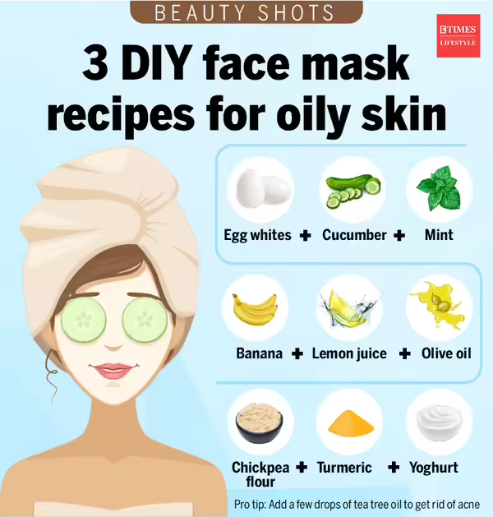
Table: Key Ingredients and Their Benefits
| Ingredient | Key Benefit | Ideal For |
| Bentonite Clay | Absorbs excess oil and impurities | Deep pore cleansing |
| Aloe Vera | Soothes irritation, hydrates | Redness & inflammation |
| Turmeric | Antibacterial, brightening | Acne-prone skin |
| Gram Flour (Besan) | Mild exfoliation, oil control | Dull or congested skin |
| Rose Water | Natural toner, refreshes | Everyday hydration |
| Honey | Antibacterial, moisturizing | Balancing oily yet dehydrated skin |
10 Best Face Masks for Oily Skin (2026)
1. Best Overall: Kaolin Clay Face Mask
Best for: All oily skin types, weekly deep cleanse
Kaolin clay is the gold standard ingredient in any face mask for oily skin. Unlike harsher clays, kaolin gently absorbs excess sebum without stripping the moisture barrier — so your skin will not produce even more oil in response.
How to Use:
- Apply a thin, even layer to clean skin
- Leave on for 10–15 minutes — until firm but NOT cracking
- Rinse with lukewarm water and pat dry
- Apply a lightweight, oil-free moisturizer immediately

2. Best DIY: Multani Mitti (Fuller’s Earth) Face Mask
Best for: Reducing sebum production, brightening dull oily skin, large pores
One of the most effective homemade face masks for oily skin — and one women across South Asia have used for generations. Multani mitti dramatically absorbs oil, minimizes pores, and gives a deeply matte finish.
DIY Recipe:
- 2 tablespoons multani mitti (fuller’s earth)
- 1 tablespoon rose water
- 1 teaspoon lemon juice (optional — for brightening and dark spots)
- 1 teaspoon honey (optional — for sensitive oily skin)
Steps:
- Mix multani mitti with rose water to form a smooth paste
- Add lemon juice if targeting dark spots or brightening
- Apply evenly to face, avoiding the eye area
- Leave for 15 minutes
- Rinse thoroughly with cool water
- Apply a light gel moisturizer immediately after
Why it works: Studies show multani mitti can reduce excess oil production by up to 30% with regular weekly use. It is the most affordable and accessible oily skin treatment available.
How often: Once or twice per week
3. Best for Large Pores: Bentonite Clay Mask
Best for: Visibly enlarged pores, oily skin and open pores, deep cleansing
If your main concern is a mask for oily skin and open pores, bentonite clay is your answer. It has a negative ionic charge that literally pulls positively-charged toxins, oils, and impurities out of your pores.
DIY Recipe:
- 1 tablespoon bentonite clay powder
- 1 tablespoon apple cider vinegar (or plain water for sensitive skin)
- Mix into a smooth paste — slight bubbling is normal
Important: Always use a non-metal bowl and spoon with bentonite clay. Metal deactivates its ionic charge and reduces effectiveness significantly.
How often: Once per week maximum — very powerful, over-use can cause dryness even on oily skin
4. Best for Sensitive Oily Skin: Honey and Oatmeal Face Mask
Best for: Oily but sensitive skin, acne-prone skin that reacts to harsh ingredients
Raw honey is naturally antibacterial and balances skin without clogging pores. Oatmeal soothes inflammation and gently exfoliates. Together, they make one of the gentlest yet most effective face masks for sensitive oily skin.
DIY Recipe:
- 2 tablespoons raw honey (Manuka honey is best)
- 2 tablespoons finely ground oatmeal (blend rolled oats in a blender)
- 1 teaspoon aloe vera gel
Steps:
- Combine all ingredients into a smooth paste
- Apply gently to face in soft circular motions — this doubles as a light scrub
- Leave for 15–20 minutes
- Rinse with cool water and pat dry
How often: 2 times per week — gentle enough for frequent use
5. Best for Acne-Prone Oily Skin: Salicylic Acid Clay Mask
Best for: Oily skin with frequent breakouts, clogged pores, blackheads
Salicylic acid is a beta hydroxy acid (BHA) that is oil-soluble — meaning it can penetrate inside the pore lining and dissolve the oil and dead skin cells causing blockages. Combined with clay, it is the most effective mask for oily acne-prone skin.
Best Store-Bought Picks:
- Peter Thomas Roth Therapeutic Sulfur Acne Masque
- Paula’s Choice Skin Perfecting 2% BHA Liquid (apply as mask, leave 5 min)
- The Ordinary Salicylic Acid 2% Masque
Warning: Do not use a salicylic acid mask on the same night as retinoids or other active treatments. Alternate days to avoid irritation.
How often: 1–2 times per week on breakout-prone areas only
6. Best Anti-Aging: Anti-Aging Face Mask for Oily Skin
Best for: Women 30+ with oily skin concerned about fine lines and enlarged pores
Anti-aging face masks for oily skin must be chosen carefully. Oily skin ages differently — it tends to stay plumper longer but pores enlarge with age. The key is finding anti-aging actives in lightweight, non-comedogenic textures.
What to Look For:
- Niacinamide — controls sebum AND reduces fine lines simultaneously
- Retinol in gel or clay texture — never in cream base for oily skin
- Peptide-infused gel masks — boost collagen without adding oil
DIY Anti-Aging Mask for Oily Skin:
- 1 tablespoon kaolin clay
- 1 teaspoon rosehip oil (non-comedogenic, rich in vitamins C and A)
- 1 teaspoon aloe vera gel
- 2–3 drops frankincense essential oil
Mix and apply for 15 minutes. Rosehip oil is one of the few oils that benefits oily skin — it regulates sebum production while delivering anti-aging vitamin A and vitamin C.
How often: 1–2 times per week
7. Best Deep Cleansing: Activated Charcoal Face Mask
Best for: Deep pore cleansing, removing pollutants and environmental impurities
Activated charcoal works like a magnet for dirt, excess oil, and environmental pollutants sitting deep inside pores. It is especially effective for women living in cities with high pollution exposure.
DIY Activated Charcoal Mask:
- 1 capsule activated charcoal (open and pour out the powder)
- 1 tablespoon aloe vera gel
- 1 teaspoon bentonite clay
- 3–4 drops tea tree oil
- Mix all ingredients into a smooth, dark paste
- Apply in a thin, even layer using a brush
- Leave for 10 minutes — do not let it dry completely
- Rinse thoroughly with warm water
Note: Activated charcoal stains fabric. Wear an old top and keep towels away from your face while rinsing.
How often: Once per week
8. Best Overnight: Overnight Face Mask for Oily Skin
Best for: Women who want to treat oily skin while sleeping
An overnight face mask for oily skin sounds counterintuitive — but the right formula delivers active ingredients while you sleep without clogging a single pore. The key is choosing water-based or gel textures, never cream.
What to Look For:
- Gel or water-based texture — no creams or oils
- Key ingredients: niacinamide, hyaluronic acid, or tea tree
- Labeled oil-free and non-comedogenic
DIY Overnight Treatment for Oily Skin:
- Apply 2–3 drops of niacinamide serum to clean face
- Layer a thin coat of pure aloe vera gel on top
- Leave overnight — rinse in the morning with your regular cleanser
This lightweight treatment reduces oil production, tightens pores, and brightens skin tone with zero risk of clogging pores overnight.
How often: 2–3 times per week
9. Best Hydrating: Hydrating Mask for Oily Skin
Best for: Oily skin that feels dehydrated or tight after cleansing
Important to know: Oily skin can be dehydrated. Dehydration (lack of water) and oiliness (excess sebum) are two completely different things. If you over-strip oily skin, it produces even MORE oil to compensate — making the problem worse.
DIY Hydrating Mask:
- 2 tablespoons aloe vera gel
- 1 teaspoon glycerin
- 1 teaspoon green tea (brewed and cooled)
- 2–3 drops niacinamide serum
Apply for 15–20 minutes. This mask delivers deep water hydration without any oil. Properly hydrated skin naturally produces less sebum over time — making this one of the best long-term strategies for oily skin management.
How often: 1–2 times per week, especially after exfoliating masks
10. Best Exfoliating: Exfoliating Face Mask for Oily Skin
Best for: Removing dead skin buildup, brightening dull oily skin, preventing clogged pores
Dead skin cells combined with excess sebum create the perfect environment for clogged pores and breakouts. An exfoliating face mask removes this buildup before it becomes a problem.
| Type | Method | Best Ingredient | How Often |
| Physical exfoliation | Gentle scrubbing action on skin surface | Ground oatmeal + honey | Once per week |
| Chemical (AHA) | Dissolves dead cells from skin surface | Glycolic acid mask | Once per week |
| Chemical (BHA) | Exfoliates deep inside pores | Salicylic acid 2% mask | Once per week |
Never use a physical and chemical exfoliating mask on the same day. Alternate types across the week to avoid over-exfoliation and irritation.

Rules for Every Mask Session:
- Always start with a clean face — double cleanse if wearing makeup
- Apply mask with clean fingers or a silicone mask brush
- Never let clay masks crack on your face — remove while still firm
- Always apply oil-free moisturizer immediately after rinsing
- Apply SPF the morning after any exfoliating mask — your skin is more sun-sensitive

FAQs
2–3 times per week is ideal. Clay masks can be used up to 3 times weekly, while stronger exfoliating or salicylic acid masks should be limited to once per week to avoid over-exfoliation.
Multani mitti (fuller’s earth) mixed with rose water is the most effective homemade face mask for oily skin. It absorbs excess oil, tightens pores, and brightens skin with regular weekly use. It is also one of the most affordable options available.
Bentonite clay masks are most effective for oily skin with large pores. The clay’s ionic charge draws impurities from deep inside pores, reducing their visible appearance after consistent use. Apple cider vinegar mixed into bentonite clay enhances the pore-tightening effect.
Yes, but choose carefully. Avoid rich cream anti-aging masks — they will clog pores. Look for niacinamide, retinol, or peptide-based masks in gel or clay textures. Rosehip oil is one of the few oils safe for oily skin with anti-aging benefits.
Consistent weekly masking is only one part of long-term sebum control. Pair your mask routine with a niacinamide serum daily, a gentle non-stripping cleanser, an oil-free moisturizer, and SPF. Over-cleansing or over-stripping skin is the most common cause of worsening oiliness.
Final Thoughts
Finding the best face mask for oily skin is not about the most expensive product or the most dramatic formula. It is about understanding what your skin actually needs — oil absorption, pore cleansing, hydration balance, or targeted treatment and using the right ingredients consistently.
Start simple: a kaolin clay or multani mitti mask twice a week, plus a hydrating aloe vera mask once midweek. In 4–6 weeks, you will see a real difference in shine control, pore appearance, and overall skin clarity.
The best skincare routine is always the one you actually stick to. Start simple, stay consistent, and your skin will thank you.
Healthy skincare is just one part of a balanced modern women’s lifestyle, where small daily habits create long-term confidence and wellness.