Here’s the thing every parent wants a moment of peace without feeling guilty about how their child is spending their time. Screens make life easy. They’re convenient, they keep kids busy, and they buy you a few minutes to breathe. But slowly, without even noticing, screen time becomes the default activity in the house.
The interesting part? The moment you start introducing screen-free activities for kids, you realize something important: kids aren’t actually attached to screens. They’re just craving something engaging, something that sparks curiosity, something that makes them feel involved. Give them the right kind of non-digital children’s activities, and they jump right usually with more excitement than you expect.
If you’ve been trying to limit screen usage in childhood, or you simply want new ideas that don’t require a tablet, this guide will help. These activities don’t demand fancy prep, expensive materials, or Pinterest-perfect setups. They’re real-life solutions easy to start, fun to continue, and honestly, a great excuse for parents to reconnect with their kids too.
Why Screen-Free Activities Matter
Kids grow best when they’re moving, touching, imagining, creating, and exploring—not just tapping or swiping on a screen. They don’t need high-tech devices to be happy; what they really need is imaginative pretend play, simple tools, and room to express themselves.
Let’s break it down. The benefits of unplugged play for kids go way beyond just keeping them busy:
Stronger Creativity
When kids engage in creative play without electronics, their brains naturally start building stories, inventing characters, and forming ideas. Even simple objects become magical in their hands boxes become houses, blankets become forts.
Improved Fine-Motor and Gross-Motor Skills
Activities like arts & crafts children projects, puzzles, sensorimotor play, or outdoor games for kids strengthen both small and big muscles. This is crucial for writing, coordination, and overall development.
Better Emotional Regulation
Screen use can overstimulate kids. But alternative play ideas to screens, like puzzles or hands-on learning for toddlers, allow them to slow down, focus, and relax. These activities teach patience and help manage emotions naturally.
Higher Concentration
When children dive into building blocks and puzzles for development or simple science experiments at home for children, they stay engaged for longer periods. It boosts focus, problem-solving, and cognitive flexibility.
Deeper Parent-Child Bonding (Screen-Free and Meaningful)
Kids love when parents join in whether it’s cooking and baking with kids, setting up a treasure hunt, or enjoying a cozy reading corner. These moments create safe emotional memories and strengthen trust.
Stronger Cognitive Development
Screen-free activities stimulate curiosity and inquiry. When kids explore DIY family fun without devices, go on outdoor adventure kids experiences, or enjoy rhythm, music and movement for kids, they’re learning without even realizing it.
When kids get a mix of alternative play ideas to screens arts and crafts, storytelling, nature walks and exploration for children, or family playtime they naturally drift toward healthier habits. You don’t have to force them off screens; you just have to offer something more interesting.
10 Screen-Free Activities for Kids (Fun, Easy & Zero Stress)
Below are ten engaging screen-free activities for kids, blending creativity, movement, learning, and peaceful downtime. Each idea includes variations for toddlers, preschoolers, and older kids.
1. Arts & Crafts — Creative Play Without Electronics
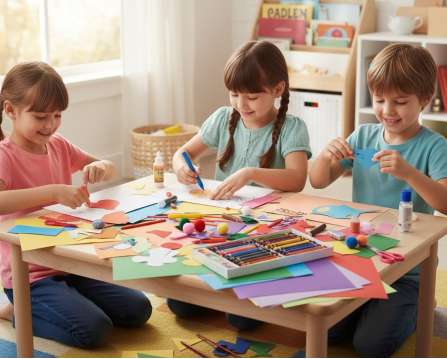
There’s something magical about handing a child a tray of craft supplies and watching their imagination unfold. As soon as the crayons, colored paper, glue sticks, and glitter hit the table, kids immediately shift into creative play without electronics. These arts & crafts children projects work beautifully for rainy days, after-school downtime, or moments when you want calm energy at home.
The best part? You don’t need fancy materials. Everyday items paper plates, cotton swabs, magazine cutouts, leftover cardboard, buttons can turn into masterpieces. This is one of the simplest alternative play ideas to screens that keeps kids busy and builds real skills.
Try these ideas:
- Paper plate animals: Kids create lions, owls, fish, or even fantasy creatures using markers and scraps of paper.
- DIY bookmarks: Great for kids who enjoy books; they get to personalize shapes, colors, and quotes.
- Finger painting for toddlers: A sensory-rich, messy, joyful experience perfect for hands-on learning for toddlers.
- Magazine collage art: Let them cut out shapes and images to design posters or mood boards amazing for creativity.
- Handmade greeting cards: A sweet way to teach empathy and kindness while improving motor control.
Why it works:
Arts and crafts help strengthen fine motor skill activities for toddlers, sharpen focus, and build creative confidence. Kids also learn patience, planning, and self-expression. More importantly, it encourages creative downtime activities children naturally enjoy no screens, no noise, just imagination guiding the moment.

2. Indoor Treasure Hunt — Imaginative Pretend Play Indoors
Kids love a challenge, and an indoor treasure hunt taps into their natural curiosity. This isn’t just a game, it’s a story, a mission, a quest. Treasure hunts create a magical blend of movement, excitement, and imaginative pretend play indoors, making it one of the best non-digital children’s activities for active kids.
You can adapt it for toddlers, preschoolers, or older children by adjusting clue difficulty. Plus, treasure hunts encourage teamwork, problem-solving, and physical movement, great for sensorimotor play and gross-motor games without feeling “educational.”
How to play:
- Hide small objects around the house stickers, tiny toys, puzzle pieces, or craft supplies.
- Write clues on sticky notes, keeping them simple for younger kids and more mysterious for older ones.
- Give the first clue and watch them race across the house with excitement.
- Let the adventure unfold, with each clue leading them to the next.
Extend the activity:
This is where the real fun starts. Turn the hunt into themed stories:
- Pirate mission: Find the lost treasure of Captain Spark
- Jungle escape: The magical fruit is hidden deep in the “forest” (living room)
- Detective challenge: Solve the mystery of the missing toy
These variations create DIY family fun without devices, keeping your child active and deeply engaged while boosting imagination, focus, and movement.

3. Reading & Storytelling Time
Reading isn’t just an activity; it’s an emotional anchor for children. It slows down their world, gives them comfort, and invites them into new worlds. Whether you choose picture books, bedtime stories, or simple chapter books, reading remains one of the strongest screen-free activities for kids because it nurtures attention, vocabulary, imagination, and empathy.
When children spend time with books, they naturally engage in non-digital children’s activities that build early literacy and communication skills. And storytelling whether you read to them or they make up their own helps them think creatively, express emotions, and understand narrative structure.
Make it special:
- Build a reading fort: Use bedsheets, pillows, and fairy lights to create a cozy hideout.
- Add a flashlight: Turn the moment into a “night adventure” for extra excitement.
- Storytelling from images: Show a picture and let them build a story around it—excellent for creative play without electronics and boosting imagination.
- Rotate books weekly: Keeps things fresh and helps children expand their interests.
The more reading becomes a ritual, the more your child feels connected, calm, and grounded. It’s a gentle way to reduce screen time for kids without forcing it they naturally start choosing books over devices when reading feels fun and special.

4. Cooking and Baking With Kids
Here’s the thing the kitchen is one of the easiest places to turn everyday moments into meaningful learning. Cooking and baking with kids isn’t just about making cute snacks; it’s a hands-on classroom. Kids measure ingredients, follow steps, observe textures changing, and learn what happens when heat, liquids, and flavors come together. It’s math, science, sensory learning, and confidence-building all rolled into one.
And because it’s a fully screen-free parent-child bonding moment, kids feel genuinely connected and included, not distracted or hurried.
Try these easy recipes that kids can help with:
- Fruit salad: Let them wash fruit, cut soft items with a kid-safe knife, and mix everything. Great for hands-on learning for toddlers.
- Mini sandwiches: Simple layering teaches sequencing and independence.
- Cupcake decorating: Colors, textures, fine-motor movement all the good stuff.
- Yogurt parfait layers: Perfect for understanding patterns and structure.
While you’re mixing and pouring, you’ll notice something else happening: kids slow down. They pay attention. They talk. And this kind of creative play without electronics becomes a memory they look forward to repeating.

5. DIY Family Fun Without Devices
Kids feel most confident when they create something with their own hands. That’s why DIY family fun without devices works beautifully. It gives them ownership, control, and pride and because it’s a non-digital children’s activity, it naturally shifts their focus away from screens.
DIY projects are perfect for weekends, lazy afternoons, or even family nights when you want everyone gathered in the same room but engaged in something creative.
Ideas worth trying:
- Build a cardboard house or robot: Kids love transforming simple materials into something imaginative. This sparks imaginative pretend play indoors later on.
- Make homemade slime: A classic for a reason. Great for sensorimotor play and keeps their hands busy.
- DIY bird feeder: Teaches responsibility and introduces outdoor learning.
- Create friendship bracelets: Perfect for fine motor skill activities for toddlers and older kids, teaching patience and pattern recognition.
DIY time also opens the door to unexpected conversation kids talk more when their hands are busy. And the best part? These creative downtime activities don’t need fancy supplies. A few household items are enough to keep kids active, curious, and device-free.
6. Outdoor Games for Kids (When You Need Fresh Air)
Sometimes kids just need space to run, jump, chase, and breathe. Outdoor games for kids offer exactly that. They build endurance, sharpen gross-motor skills, and teach teamwork without feeling like structured learning. They’re fun, free, and incredibly effective at helping kids reduce screen time because the excitement outdoors is hard to compete with.
Simple outdoor ideas that always work:
- Tag: Fast, energetic, and great for building agility.
- Hopscotch: A classic that improves balance and coordination.
- Nature scavenger hunt: Turns the backyard into an adventure and encourages nature walks and exploration for children.
- Jump rope challenges: Rhythm, focus, and movement & physical activity for kids in one simple tool.
- Water balloon toss: Perfect for hot days and promotes teamwork and quick reflexes.
These outdoor moments also sneak in a bit of learning. Kids observe insects, plants, textures, and weather, turning playtime into mini science lessons without any formal teaching.
When you mix outdoor games with occasional outdoor adventure kids experiences, even simple afternoons feel like big, memorable events. And best of all? Fresh air naturally resets their mood, energy, and attention span.
7. Building Blocks & Puzzle Time
Here’s what makes building blocks and puzzles such a winner: they look simple, but they quietly train a child’s brain in the best possible way. Whether your child is stacking wooden blocks, clicking together LEGO pieces, or working through building blocks and puzzles for development, they’re strengthening problem-solving skills, patience, and spatial awareness without even realizing it.
This kind of non-digital children’s activity teaches kids how to plan, test ideas, and troubleshoot all skills they’ll use for a lifetime. Toddlers benefit from the fine-motor practice, while older kids learn to stay focused and complete a task from start to finish.
How to make it more fun:
- Turn it into a “tower height challenge” and see who can build the tallest structure without it falling.
- Try a timed “speed puzzle” competition.
- Give them themes like build a zoo, create a bridge, or design a house.
These small twists transform a quiet activity into a game that boosts engagement and makes creative play without electronics something kids look forward to.

8. Science Experiments at Home for Children
Kids are naturally curious, and science experiments at home for children feel like little adventures. They mix learning with excitement, giving kids the thrill of discovery while staying completely screen-free. These experiments become a hands-on playground that supports sensorimotor play and gross-motor games, helping children explore textures, reactions, colors, and cause-and-effect thinking.
The best part? You don’t need fancy tools just simple things from your kitchen.
Try these fun experiments:
- Baking soda volcano: A classic activity that never fails. Kids watch a chemical reaction unfold right in front of them.
- Dissolving Skittles rainbow: Easy, colorful, and perfect for littles fascinated by patterns.
- Paper towel color mixing: Great for teaching absorption and blending.
- Balloon inflation with vinegar: Feels like magic, teaches real science.
Science play is one of the alternative play ideas to screens that keeps kids focused, active, and learning without using any gadgets. It’s messy, joyful, and one of the best ways to make STEM fun at home.

9. Rhythm, Music & Movement for Kids
If your child has extra energy to burn (and honestly, most kids do), this is where rhythm, music, and movement for kids comes to the rescue. Music encourages emotional expression, boosts confidence, and builds coordination naturally. It’s one of the easiest and most effective movement & physical activity for kids indoors, especially on days when outdoor play isn’t an option.
You don’t need real instruments; anything can become a beat-maker if you hand it to a creative child.
Try these fun ideas:
- Freeze dance: Play music, dance, freeze — simple and hilarious.
- DIY drums: Use pots, plastic containers, or empty oatmeal cans.
- Rhythm imitation games: Clap a pattern and let your child repeat it.
- Music parade: Let kids march around the house, shaking bells or tapping drums.
This kind of creative downtime activity gives them a positive outlet for energy, keeps them active, and makes screen-free time feel exciting instead of restrictive.

10. Family Picnic Ideas (Screen-Free & Cozy)
You don’t need perfect weather or a big backyard to create a picnic your child will remember. A cozy indoor picnic offers all the joy without leaving the house it’s wholesome, simple, and perfect for DIY family fun without devices. All you need is a soft blanket, a few snacks, and some background music.
Kids love anything that feels different from the usual routine, which makes this a perfect way to reduce screen time for kids while keeping things fun.
Make it even better:
- Let kids choose the snacks or make a simple “picnic menu.”
- Add a small basket or tray so they feel involved in setting things up.
- Combine it with family picnic ideas screen-free like storytelling, drawing, or reading together.
This gentle change of environment encourages conversation, creativity, and parent-child bonding screen-free, creating memories that feel warm and personal the kind they’ll hold onto forever.
FAQs About Screen-Free Activities for Kids
Q1. How do I reduce screen time for kids without causing tantrums?
Start with short, fun alternatives. When kids get engaged in hands-on activities, the transition becomes natural.
Q2. What if my child refuses to try non-digital children’s activities?
Offer choices. Kids love control. Instead of saying, “Do this,” say, “Which one should we try first?”
Q3. How much screen time is too much?
Health experts recommend balancing screen time with active, creative, and outdoor play.
Q4. Are screen-free activities suitable for toddlers?
Absolutely. Activities like blocks, painting, music, and sensory play are perfect hands-on learning for toddlers.
Q5. What if I don’t have craft supplies?
Use what you already have paper, crayons, kitchen ingredients, boxes, spoons, lids. Kids don’t need fancy materials.
Conclusion
At the end of the day, screen-free activities for kids aren’t about banning technology or pretending screens don’t exist. They’re about giving your child richer, deeper, healthier experiences the kind that spark imagination, build lasting memories, and strengthen the bond you share at home.
When kids get even a small taste of creative play without electronics, something amazing happens: their curiosity wakes up. They start exploring. They ask more questions. They try new things. They discover the joy of hands-on learning for toddlers, the excitement of outdoor games for kids, and the comfort of reading and storytelling time inside a cozy nook they built themselves.
These simple, non-digital children’s activities do more than keep kids busy. They help them grow. They sharpen fine motor skills through crafts, boost confidence through DIY family fun without devices, and encourage teamwork during playdate games without tablets. Even the calm moments like drawing, puzzles, or quiet sensory play teach patience, focus, and emotional balance.
As a parent, these moments also give you something valuable: a chance to connect with your child without the usual distractions. Whether you’re baking together, going on nature walks and exploration for children, or dancing around the living room during rhythm-and-movement time, you’re building memories that stay with them long after childhood.





2 thoughts on “10 Powerful & Positive Screen-Free Activities for Kids at Home”