Medications like Ozempic, Wegovy, and Zepbound have changed the way many women approach weight loss and health management. Whether it’s for managing Type 2 Diabetes or simply trying to regain control over body weight, these medications can deliver real, noticeable results.
But there’s a side of the story that often gets overlooked.
As the number on the scale drops, something else may be dropping too your muscle mass.
And for women, that’s not a small issue. It affects everything from metabolism to strength to long-term health. The goal isn’t just to lose weight it’s to lose fat while staying strong, capable, and energized.
That’s where strength training comes in.
Why Muscle Matters More for Women Than You Think
Let’s be honest many women start a weight loss journey focused on getting “smaller.” But what actually shapes your body, supports your health, and keeps you feeling strong is muscle.
Muscle plays a major role in:
- Maintaining a healthy metabolism
- Supporting joint stability and posture
- Protecting bone density (especially important for women)
- Making everyday movements easier
Without enough muscle, even simple activities like carrying groceries, climbing stairs, or lifting a child can start to feel harder over time.
There’s also a long-term risk: Sarcopenia. This condition becomes more common as women age and is linked to weakness, reduced mobility, and increased risk of falls.
Now add GLP-1 medications into the mix. These drugs reduce appetite, which can lead to eating less overall—including less protein. Combine that with no resistance training, and your body may start breaking down muscle along with fat.
What this really means is simple: if you’re not actively working to keep your muscle, your body won’t prioritize it.
Strength Training: Not Just for Athletes – For Every Woman
There’s still a common misconception that lifting weights will make women bulky. In reality, the opposite is true.
Strength training helps you:
- Look more toned, not bulky
- Improve energy levels
- Boost metabolism
- Feel physically and mentally stronger
For women on GLP-1s, strength training becomes even more important. It tells your body: “Keep this muscle. I need it.”
And you don’t need complicated routines or hours in the gym. A well-structured, beginner-friendly workout done consistently can make a huge difference.
A Simple Full-Body Workout Designed for Women
This routine focuses on compound exercises movements that use multiple muscle groups at once. These are efficient, effective, and perfect for beginners.
It targets all the essential movement patterns your body needs:
- Lower body strength
- Upper body pushing and pulling
- Core stability
- Functional movement
Important note: If you’re currently using GLP-1 medications, it’s always a good idea to check with your doctor before starting a new workout routine.
What You’ll Need
You don’t need a fancy gym setup to get started. Keep it simple:
- A sturdy surface (chair, bench, or low table)
- A pair of dumbbells (start light to moderate)
- Optional: an exercise mat
If you’re working out at home, this setup is more than enough.
Workout Structure: Keep It Simple and Consistent
Consistency matters more than perfection.
Start with 2–3 sessions per week, allowing at least one rest day between workouts so your body can recover and rebuild.
Step 1: Warm-Up (5 Minutes)
Don’t skip this. A proper warm-up reduces injury risk and prepares your muscles.
You can do:
- Light cardio (walking, cycling)
- Jumping jacks or step jacks
- Arm circles and bodyweight squats
Step 2: Strength Training
Perform the exercises in order:
- First 6 exercises: 3 sets of 6–12 reps
- Final exercise (core): 3 sets of 8–12 reps
- Rest: 90–120 seconds between sets
The goal is controlled movement not rushing through reps.
Step 3: Progress Over Time
Here’s where real change happens.
As your body adapts:
- Increase your weights gradually
- Try more challenging variations
- Move toward 4–5 sets of 4–6 reps
This higher intensity is what builds strength and preserves muscle effectively.
Detailed Exercise Guide
Let’s break each move down in a way that actually makes sense.
1. Bodyweight Squat
This is your foundation for lower-body strength.
It targets your:
- Quads
- Glutes
- Hamstrings
How to do it:
Stand with feet slightly wider than hip-width. Lower your body as if sitting in a chair, keeping your chest lifted and knees aligned. Push through your heels to stand back up.
Why it matters for women:
Strong legs support balance, posture, and daily movement.
Progression:
Hold a dumbbell (goblet squat) → move to barbell squat
2. Hands-Elevated Push-Up
A beginner-friendly way to build upper-body strength.
How to do it:
Place your hands on a raised surface. Keep your body in a straight line and lower your chest toward the surface, then push back up.
Why it matters:
Strengthens chest, shoulders, and arms—areas many women want to tone.
Progression:
Lower the height → full push-up → bench press
3. Dumbbell Bent-Over Row
This exercise strengthens your back and improves posture.
How to do it:
Hinge at your hips, keep your back flat, and pull dumbbells toward your torso while squeezing your shoulder blades.
Why it matters:
Helps counteract poor posture from sitting and builds upper-body definition.
4. Dumbbell Glute Bridge
A simple but powerful glute exercise.
How to do it:
Lie on your back, knees bent. Push through your heels to lift your hips while squeezing your glutes.
Why it matters:
Strong glutes support your lower back and improve overall strength.
Progression:
Single-leg bridge → deadlifts
5. High Plank to Downward Dog Tap
This movement combines strength, balance, and flexibility.
How to do it:
Start in a plank, push back into downward dog, and tap your opposite ankle.
Why it matters:
Builds shoulder strength and core stability at the same time.

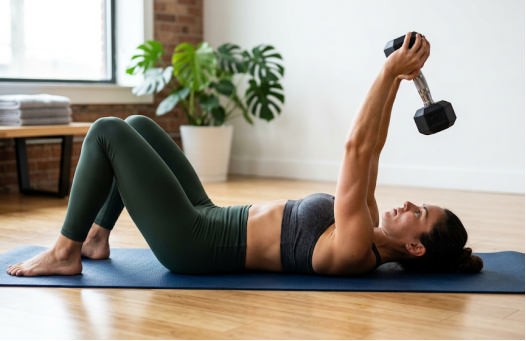
6. Dumbbell Pullover
A unique move that works multiple upper-body muscles.
How to do it:
Lower a dumbbell behind your head while lying down, then bring it back above your chest.
Why it matters:
Targets back, chest, and arms great for overall upper-body tone.
7. Dead Bug
One of the most underrated core exercises.
How to do it:
Lie on your back and alternate extending opposite arm and leg while keeping your core tight.
Why it matters:
Improves coordination, stability, and core strength.
Progression:
Hollow hold → hollow rocks
Nutrition: The Missing Piece Most Women Overlook
Let’s talk about what happens outside the gym.
GLP-1 medications often reduce appetite which can make it easy to undereat, especially protein.
That’s a problem.
Protein is essential for:
- Preserving muscle
- Supporting recovery
- Keeping you full longer
A good target:
1.0 to 1.5 grams of protein per kilogram of body weight daily
If you’re not hitting that range, your body may struggle to maintain muscle even if you’re working out.
Simple ways to increase protein:
- Add eggs, chicken, or yogurt to meals
- Include protein shakes if needed
- Focus on protein first, then fill the rest of your plate
The Real Goal: Strong, Not Just Smaller
Here’s the shift that changes everything.
Instead of asking:
“Am I losing weight?”
Start asking:
“Am I getting stronger?”
Because strength brings:
- Confidence
- Independence
- Better health long-term
GLP-1 medications can support your journey but strength training shapes the result.
Final Thoughts
If you’re a woman using GLP-1 medications, don’t rely on weight loss alone to define progress.
Build strength. Protect your muscle. Fuel your body properly.
You don’t need extreme workouts or perfection. You just need consistency, patience, and a plan that works for you.
And this is a solid place to start.