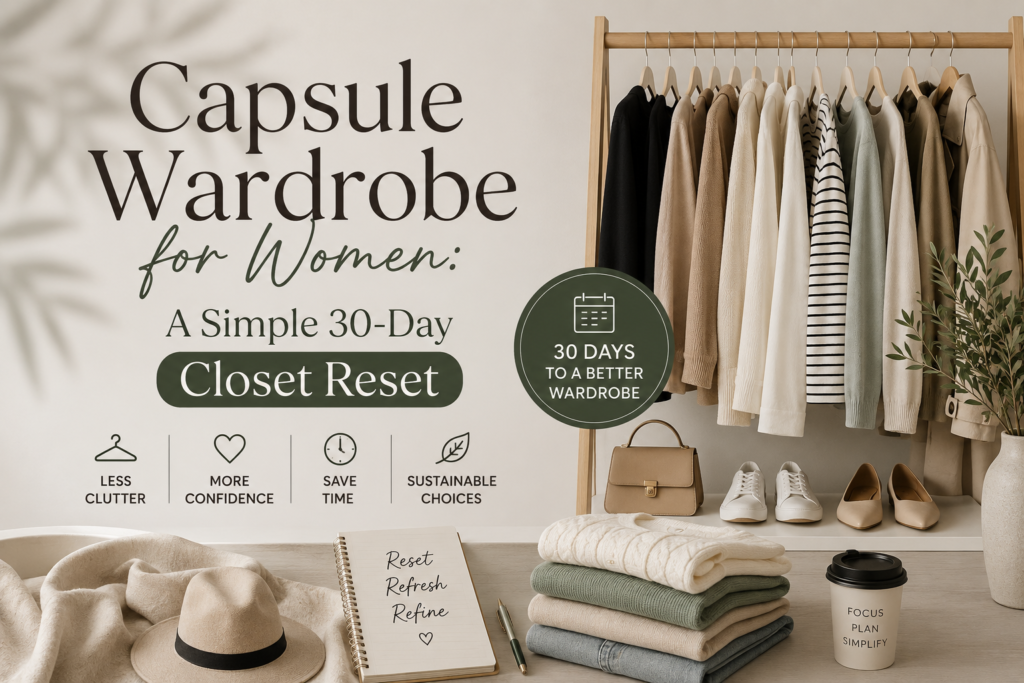
Here’s what nobody mentions: you own more clothes than ever before. Yet you still stand in front of your closet each morning with nothing to wear. This isn’t a shopping problem. A capsule wardrobe for women solves exactly this. It’s not about owning less for the sake of it. It’s about finally owning clothes that earn their place. It sounds too simple to work. That’s probably why most women dismiss it before trying.
What a Capsule Wardrobe Actually Is (and Isn’t)
This isn’t a new TikTok trend, even though it feels like one. London boutique owner Susie Faux coined the term in the 1970s. She noticed her customers kept buying clothes that never earned a place in their closets. Her fix was simple: a small collection of well-made pieces that didn’t chase trends. Designer Donna Karan later brought the idea to the U.S. with her “Seven Easy Pieces” collection. Honestly, the core logic hasn’t changed much since.
In plain terms, a capsule wardrobe for women means a limited set of pieces. You choose them for fit and versatility. They mix and match into far more outfits than the item count suggests.
Here’s what it isn’t: a strict number you must hit. It’s not a punishment for owning “too much” either. A capsule for someone in client meetings four days a week looks nothing like one for someone working from home in leggings. Same idea, different closet. The real principle isn’t a specific list. It’s the habit of asking whether something earns its place before it takes up space.
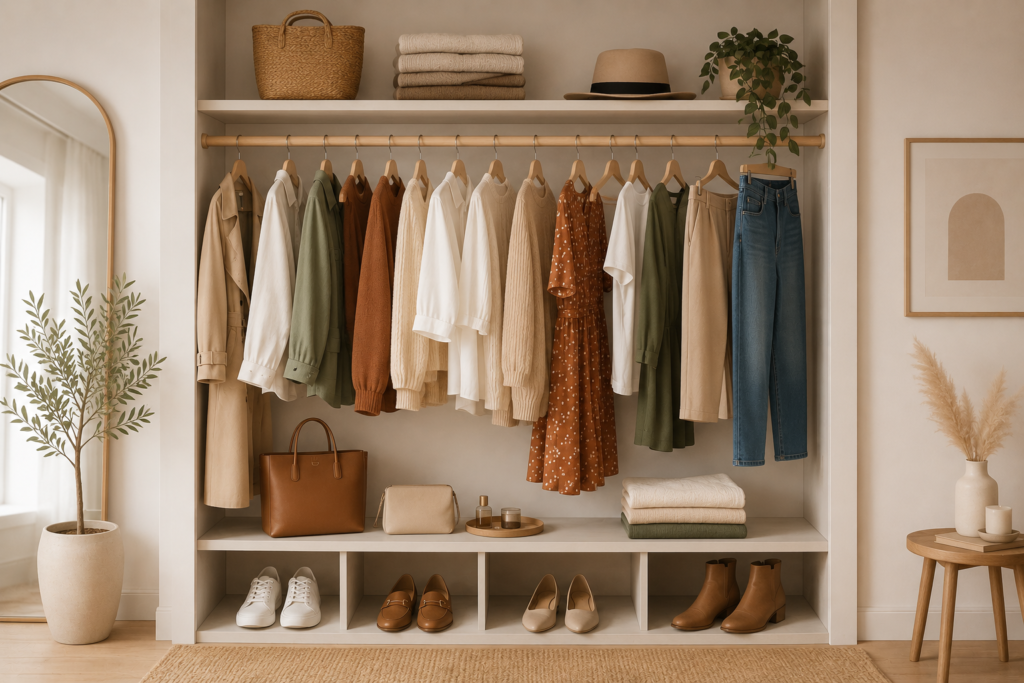
The 30-Day Plan, Week by Week
Week 1: Audit, Don’t Purge Yet
Pull everything out. Every last thing. Sort it into three piles: worn in the last three months, worn rarely, and never worn. Don’t donate anything yet. This week is about seeing your wardrobe clearly. Don’t rush decisions while standing in a pile of clothes at 9pm. Many women skip this step and buy “capsule basics” right away. That usually just adds another layer of clutter on top of the one they already have.
Week 2: Find Your Core Pieces
Look through your “worn often” pile. You’ll spot a pattern – colors you keep returning to, fits that always work. This becomes your foundation. Most women are surprised at how narrow their real preferences turn out to be once they see them laid out this way.
Week 3: Fill the Gaps You Actually Have
Skip the gaps some Pinterest board tells you to fill. Focus on the ones you personally keep running into. Did you keep reaching for a black blazer that doesn’t exist in your closet? That’s your gap. Buy two or three pieces, tops included, then stop.
Week 4: Build Real Outfits Before You Let Anything Go
Before donating your “never worn” pile, build 10 to 15 real outfits. Use only your capsule pieces. If something can’t work into at least two outfits, that’s usually your answer.
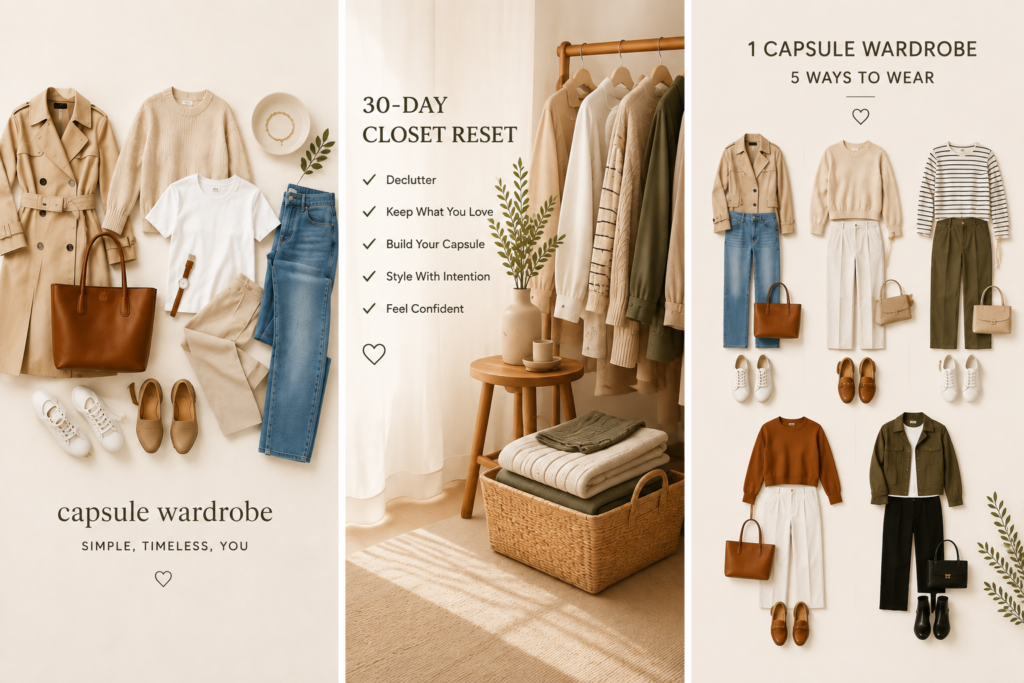
Essential Pieces Every Woman’s Capsule Needs
| Category | Core Pieces | Why It Earns Its Spot |
| Tops | White button-down, neutral tee, one statement blouse | Layers under almost anything |
| Bottoms | Well-fitted trousers, dark denim, one skirt | Covers casual and semi-formal |
| Outerwear | Tailored blazer, versatile coat | Instantly elevates simple outfits |
| Dresses | One work-appropriate, one flexible day-to-night | Fewer decisions, more occasions covered |
| Shoes | Neutral flats, one heel, everyday sneakers | Comfort and formality both covered |
| Accessories | One structured bag, minimal jewelry set | Ties outfits together without adding bulk |
Treat this table merely as a starting point, not as definitive. The climate of your area, the job you have, and your own personal tastes should have a greater influence on the final list than any chart available online including this one.
Common Mistakes That Derail a Capsule Wardrobe
A “perfect” number matters far less than whether you actually wear each piece. Don’t obsess over hitting exactly 33 items – that’s just a popular internet rule, not a requirement.
Buying the whole capsule at once skips an important step. Slower, gap-based shopping naturally tests whether a piece fits your real life.
Don’t prioritize looks over comfort. A beautiful piece you avoid wearing because it pinches isn’t a capsule piece. It’s just clutter with better lighting.
Don’t ignore your actual climate either. A capsule built from a magazine spread rarely accounts for six months of humidity or freezing commutes.
If decision fatigue shows up in other areas of your life too, read our guide about how to simplify your life as a woman. The same “fewer, better choices” logic shows up everywhere once you start noticing it.
Using AI Outfit Apps to Plan Combinations From Fewer Clothes
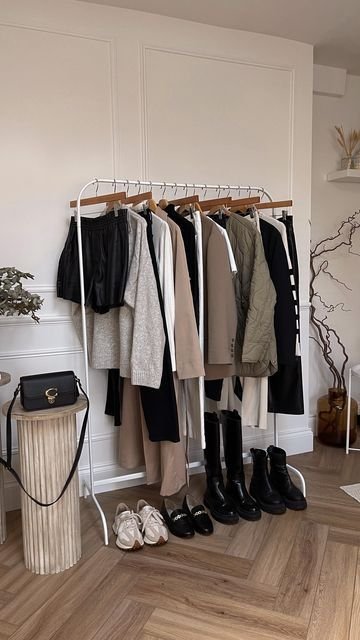
Several AI-powered wardrobe apps now let you photograph everything you own. They generate outfit combinations automatically. This genuinely helps during week four, when you’re deciding whether a piece has earned its keep. Instead of guessing whether 12 tops and 6 bottoms give you enough range, these apps surface combinations you wouldn’t have thought of yourself. Some apps flag pieces that never get paired with anything in your digital closet. That’s a fast, slightly humbling way to spot dead weight before donating. These tools won’t replace your own eye for fit and comfort. But as a shortcut for week four, they’re worth trying. Want to know how else AI is quietly changing daily life for women? Check out our AI section.
Why This Is Worth the Effort
A smaller, smarter closet does more than save time each morning. It changes how you feel getting dressed at all. Fewer bad-fit options mean fewer small moments of self-doubt before you even leave the house. That adds up over weeks, even if you barely notice it happening. If quiet confidence-building like this appeals to you, our piece on building real emotional resilience explores the same idea from a different angle.
There’s a sustainability angle worth mentioning too. American households throw away a staggering amount of clothing every year. Much of it is barely worn, according to EPA data on textile waste. Buying fewer, better pieces isn’t just a personal win. It adds up on a larger scale too.
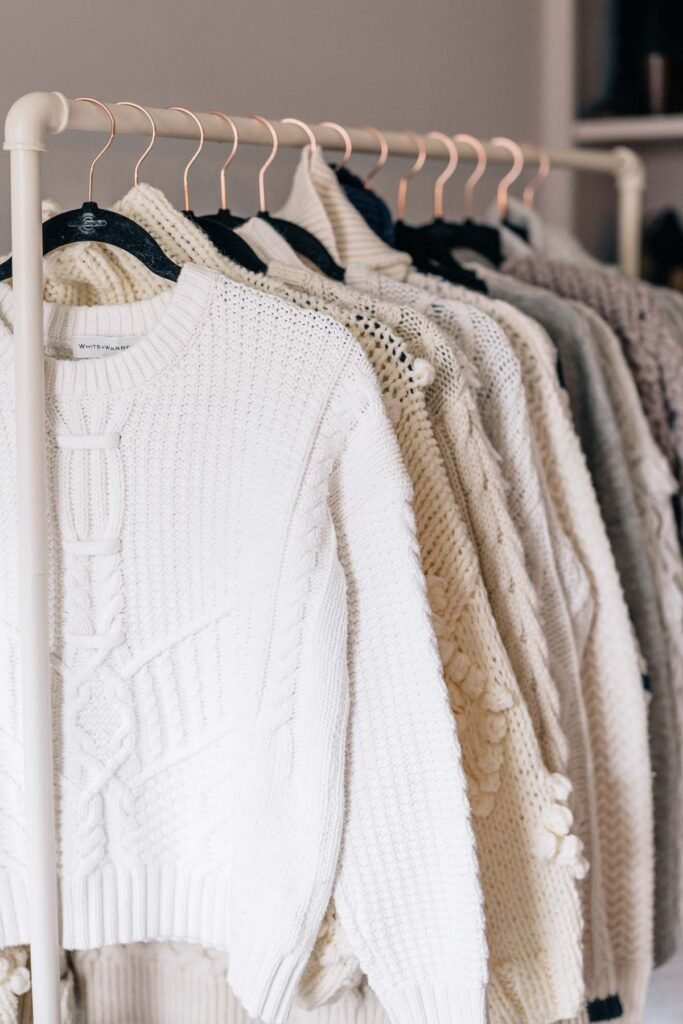
FAQs: A capsule wardrobe for women
There isn’t a specific figure — the typical amount is between 25 and 40 items, provided that basic items such as underwear are not included. The correct number actually varies according to your way of life and how frequently you do your washing.
Not at all. In the first and second weeks you should stick to the clothes you already have, and new purchases ought to be made only to fill actual gaps that you’ve identified, not to replace a system which is already functioning.
Yes, all you have to do is use pieces that match your real daily routine, not an idealised one. In this case, durability and easy care are far more important than having a perfectly selected colour scheme.
Most women carry out a simple seasonal review every few months, exchanging only a few items rather than restarting the entire thing. Think of it as a living system rather than a one-off task.
Final Thoughts
The idea of having a capsule wardrobe for women wasn’t really about imposing restrictions; it was about saving energy when choosing what to wear so that more of yourself is left for the rest of the day. Try the 30-day plan honestly before criticizing the outcome – and let your wardrobe win its place back, one week at a time. If you’d like further suggestions on living with less but in a better way, take a look at our full lifestyle section.
What week are you beginning with? Pass this on to a friend who’s been putting off her closet cleanout for months.