If your heels feel like sandpaper whenever you pull off your socks, chances are high that you’re not the only one experiencing that feeling. Flaky, cracked heels make the list of the most popular complaints about skin problems, mostly in springtime when sandals come out of hibernation. And the great news is that regular soft heels routine can turn the roughest and worst-looking heels into baby soft skin within 2 weeks! No need to pay thousands for spa treatments to have soft heels; all you need is a routine based on proper daily practices like skin cleansing, exfoliating, hydration, and overnight skin care. Read on to learn how to create your heel care routine that doesn’t conflict with your daily life, find out the reasons behind your cracked heels, and develop a practical cracked heel treatment routine for those who need something more efficient than that.
Why a Heel Moisturization Routine is Crucial for Good Foot Health
Heels are bearing our total weight every day and they do not contain oil glands unlike the rest of the skin on the human body. This makes them more prone to dryness and without a special treatment regime, dead skin will turn into flakes that will ultimately lead to cracks on the heels. Having a good heel moisturization routine is not only important for aesthetic reasons, but for foot health in general, as it can help prevent painful cracks, infections, and problems with mobility caused by cracked heels. The thickness of the skin on the heel may be four times greater than that of skin in other places of the body, and that is why regular body lotions don’t work for this issue.
Common Causes of Cracking Heel
It is always helpful to identify the causes before any treatment is done. Common causes include:
- Wearing open back footwear that exposes the heels to continuous rubbing
- Long periods of standing which result in increased pressure on the skin and subsequent cracking
- Taking hot showers using harsh soaps with fragrance that removes natural oils
- Dry and cold weather or long exposure to air conditioning or heating
- Other underlying problems like eczema, psoriasis, diabetes, and thyroid problems
- Skin aging that reduces production of natural oils as one ages
Without intervention, these causes will continue compounding until one needs a cracked foot treatment rather than a preventive measure. This is precisely why dry heels remedies and soft heels practices are important.
Creating a Daily Soft Heels Routine
Consistency is preferable to intensity in foot care practices. Spending a few minutes every day will always be more effective than having long weekend treatments. It is a soft feet routine that needs to be followed regularly rather than just applying one good product.
Morning Foot Care Tips
Morning routine should be focused on prevention not restoration, so do not complicate it too much:
- Use lotion as a protection before putting on shoes to preserve moisture from overnight treatment
- Wear socks or closed shoes instead of open backs to minimize the friction during the day
- Put insoles or silicone heel sleeves in case you have to stay on your feet all day
- Have moisturizer and pumice stone available at home as the most helpful foot care tips are those that will be followed
This soft feet advice may seem insignificant but it is an essential part of any soft heels routine, helping to prevent the moisture loss after overnight treatment.
How to Take Care of Feet at Bedtime for Overnight Restoration
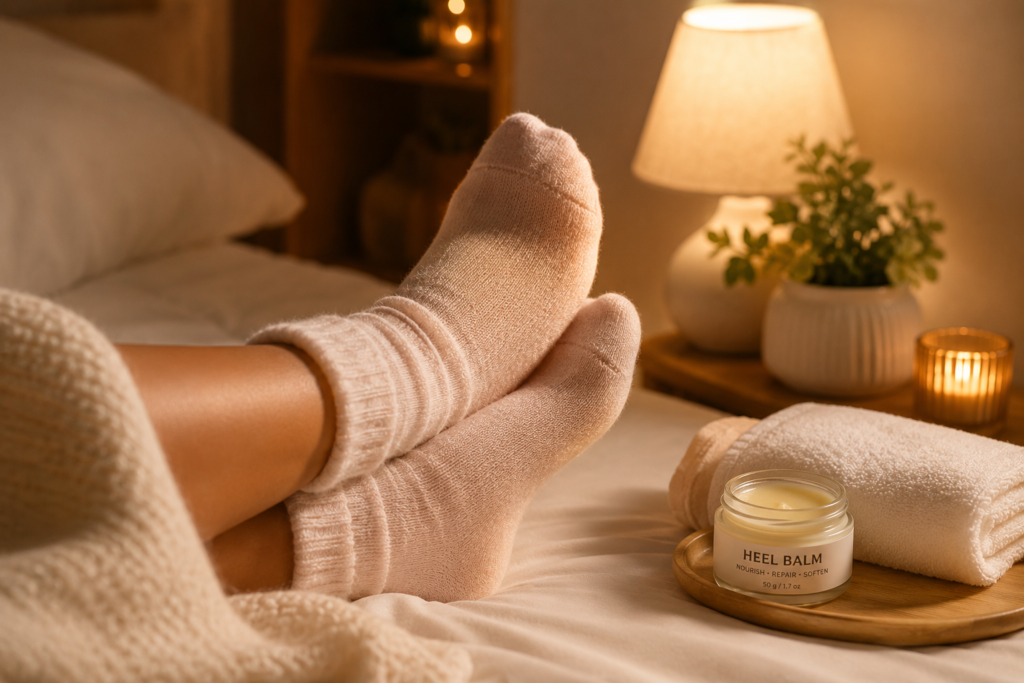
The most efficient way to take care of your feet at bedtime is after a long day of activities because during this period, your skin can get all the benefits from the treatment before they wash it off or walk. In case of a heel restoration treatment, this is when it works the best:
- Wash your feet with warm water instead of hot water and dry completely
- Remove the dead skin from the surface gently using a file or pumice stone
- Use an occlusive moisturizer like shea butter, Vaseline or cream with urea
- Put on soft cotton socks to keep the cream locked against your skin overnight
This daily routine will ensure you have softer heels in the morning.
Putting It All Together – The Ultimate Soft Heels Routine: 3 Simple Steps
It’s time to get started! Here’s a soft heels routine in three easy steps that you can begin following tonight.
Step 1 – Soaking and Exfoliation of Feet
Start the soft heels routine by soaking feet in warm water for 10–15 minutes; you can even add some Epsom salt or a few drops of tea tree oil to soften the skin and relieve stress. After skin gets softened, exfoliate your heel and ball of the foot using a foot file, pumice stone, or fine-grain foot scrub with soft circular movements. Be careful, do not saw on your feet and do not take off a lot of skin at once – over-exfoliation will lead to micro-tears and cracks instead of helping them heal.
Soaking Time
Ten to fifteen minutes is usually enough to soften skin on a daily basis. In case of really cracked heels, increase soaking time up to 20 minutes two-three times a week; remember that after soaking it is important to apply moisturizer immediately, as water evaporation can cause additional dryness.

Step 2 – Moisturizing Your Heels for Proper Hydration
Once your skin cells have been gently removed, you will pat your feet dry and then apply an enriching and nourishing product. You should choose a rich product that contains urea, lactic acid, glycerin, and/or shea butter. The latter products have properties of both humectants and emollients, which means that they will hydrate your skin by drawing water in and keeping it there. While lighter lotions will do great during the day, you should use thicker creams and balms at night.
Step 3 – Night-time Treatment for Your Feet
The next step towards achieving soft heels involves night time treatment. After applying enough amount of heel balm or petroleum jelly, you will put on your cotton socks to lock in moisture and avoid staining your bedding. Such dry feet treatment applied every night within 1 to 2 weeks will give you soft heels.
Overnight Heel Mask Recipe
Mix one tablespoon of coconut oil, one teaspoon of honey, and some lemon juice to make an overnight heel mask recipe that is quite easy and soothing to prepare. It is good to be used overnight and can be washed off the following day. It is one of the simplest ways to get soft heels naturally.
Cracked Heels Therapy: Time for a Podiatry Visit?
While self-care usually solves the problem, deep cracks, cuts, pain, or bleeding are symptoms requiring cracked heel treatment at a podiatric clinic. The majority of the foot health specialists suggest soaking and massaging feet at night, scrubbing the dead skin off using a loofah or foot scrubber, and applying a heavy moisturizer before bedtime as an essential part of the cracked heels therapy regimen, which is confirmed by recommendations from the Mayo Clinic on how to treat cracked heels.
Visit a podiatrist in case you have:
- Cracks in the skin of the feet not cured within two weeks of persistent home therapy
- Inflammation, swelling, or discharge around the crack, suggesting an infection
- Bleeding, sore pain, or deep cracks with visible raw skin
- Diabetes or poor circulation, as cracks tend to develop into more serious conditions faster
When home treatment fails, your soft heels therapy routine may benefit from debridement or prescription medications.
Soft Heels Routine to Welcome Sandal Season
With warming weather and sandal season around the corner, bare feet cannot be hidden anymore. The reality is that a soft heel routine needs to be started weeks ahead of time, not days. Here’s how:
- 3–4 weeks prior: increase the frequency of exfoliation and hydration to allow for proper skin regeneration
- 1 week prior: start using richer balm and put on cotton socks every night
- On the day: make sure to have a 20 minutes long soak followed by exfoliation, apply moisturizing mask and apply tinted foot cream
Making it part of your everyday routine and not a seasonal one is the true key to having baby soft heels and being unafraid to show them off.

Best Products & Natural Treatments for Supple Heels
There is no need to splurge on an elaborate pedicure to maintain healthy feet right from your house. All the components required for a good treatment for dry heels are already present in your kitchen or bathroom cabinet. Some of my favorite products include:
- Coconut oil – a natural moisturizer with some antibacterial properties
- Honey – a natural humectant with some antibacterial properties
- Foot soak using oatmeal – reduces irritation while making skin soft for easy exfoliation
- Foot soak using petroleum jelly & lemon juice – a combination often recommended as a treatment for dry feet
- Listerine & vinegar soak – a popular home treatment that helps to soften dry skin; although it should be used in moderation due to its drying properties as alcohol-based soaks
All these treatments are easily integrated into your existing treatment for dry heels process without increasing expenses or effort. In case you are not keen on DIY remedies, we have a detailed guide on the best products available in the market for the treatment of dry heels.
Healthy skin starts from within. If you’re also dealing with dryness caused by hormonal changes, read our guide on How Hormones Impact Your Skin:
Comparing Common Heel-Softening Ingredients for Soft Feet
Use the table below to pick ingredients that fit your soft heels routine and skin type.
| Ingredient | Best For | When to Use | Natural Option? |
|---|---|---|---|
| Urea Cream (10–25%) | Deep exfoliation + hydration | Night | No |
| Shea Butter | Intense moisture lock | Night | Yes |
| Coconut Oil | Light daily hydration | Day or night | Yes |
| Petroleum Jelly | Sealing in moisture | Night | No |
| Tea Tree Oil | Soothing soak additive | During soak | Yes |
| Honey | Gentle humectant mask | Night | Yes |
Soft Heels Routine FAQ’S
It normally takes between 3 to 7 days of regular maintenance to see softer skin, whereas it takes about 2 to 3 weeks of nightly application to completely heal deep cracks.
Yes. As compared to harsh exfoliation chemicals for the face, simple heel exfoliation and moisturization can be done on a nightly basis without causing any harm to your skin. Do not scrub harshly each and every night, rather alternate light scrubs 2 to 3 times in a week along with daily moisturization.
Yes. As compared to harsh exfoliation chemicals for the face, simple heel exfoliation and moisturization can be done on a nightly basis without causing any harm to your skin. Do not scrub harshly each and every night, rather alternate light scrubs 2 to 3 times in a week along with daily moisturization.
For fast relief, soak feet, exfoliate gently, apply a urea-based cream, then seal with petroleum jelly and cotton socks overnight. Repeating this dry feet treatment for several consecutive nights produces the quickest visible results.
Natural ingredients like coconut oil, shea butter, and honey can absolutely deliver smooth heels naturally, though clinical-strength urea or lactic acid creams tend to work faster on severely cracked, stubborn skin.
Stick with your soft heels routine even after heels feel smooth. Maintenance is far easier than starting over, so keep moisturizing nightly, choose supportive shoes, and exfoliate weekly even once your heels look completely healthy.
Your Heel Care Routine
Healthy heels don’t happen overnight, but a realistic soft heels routine you can actually stick with will outperform any single miracle product. Start with the basics – soaking, gentle exfoliation, rich moisturizing, and an overnight seal – and adjust based on how your skin responds. Within a couple of weeks, dry, cracked heels can give way to genuinely smooth heels naturally, ready for sandals, bare feet, and confident steps all year round.
Just like your feet, the rest of your skin also benefits from a consistent skincare routine. Check out our complete guide:
for more fashion and health related blogs visit our website she simplifies