When a woman suffers from ADHD burnout, it can be like having a bad headache and looking at the problem and thinking, “Why don’t I just do this simple step, and everyone else does it fine? You’re doing things like: showing up, answering calls, taking care of people, working, parenting, studying, running a home, but you are really exhausted on the inside.
This type of burnout is far from sloth. It has nothing to do with willpower. Not at all because you are “bad at life.” Burnout can start to develop gradually for years for many women as they learn to hide their symptoms, overcompensate, people-please, and push themselves to work in ways their brain was never intended to function.
The hard part? Burnout from ADHD can be undetectable. You might appear to be coping fine on the surface and be suffering on the inside. This is why it is important to know the symptoms, causes, and steps to take to recover.
Let’s discuss what ADHD burnout looks like for ladies and getting back to yourself.
ADHD Burnout in Women: What Does It Really Mean?
ADHD burnout symptoms in women occur when their mental, emotional and physical toll is stretched too thin for too long a period, creating a state of mental, emotional and physical exhaustion. Chronic stress, executive dysfunction, sensory overload and emotional overwhelm, perfectionism, and the need to look “fine” are all frequently associated with it.
Burnout is not the same as feeling tired rather it will persist even after a good night’s rest. You might feel heavy and can rest. You may have an idea of what should be done, but not be able to get started. You feel very deeply, but are numb.
In the case of women with ADHD, burnout may be a consequence of striving to be organized, consistent, plan ahead, emotional, and to manage time all focus areas of ADHD.
It could be at work, in relationships, parenting or household duties, in school or even social life. It can come after a major life change, like becoming a parent, working through a stressful relationship, engaging in hormonal fluctuation or years of unrecognized ADHD.
Common Symptoms of ADHD Burnout in Women
The symptoms of ADHD burnout in women can be confusing, as they can mimic those of stress, anxiety, depression, hormonal shifts or fatigue. However, many women say they feel like, “I just can’t continue living like this.
These are some of the common warning signs:
- Fatigue after sleep (even if well-rested)
- Has trouble with basic functions
- Brain fog and an increase in forgetfulness.
- Emotional numbness or being easily provoked to anger
- Easily provoked to tears or just becomes withdrawn
- Feeling upset when you can’t do an activity that you’ve always enjoyed
- Being overstimulated by sounds, clutter or choices
- Facing challenges in concentrating or remembering things
- Guilt and shame and that you’re not making it,
- Needing more isolation or recovery time
- Having a more intense experience of rejection sensitivity
Comments to include: using caffeine or scrolling, using food or distractions to deal, relying on stimulants.
One of the most obvious signs is when “little” things begin to seem impossible. Making multiple trips, such as to do chores, answer a letter, make an appointment, or select a meal can become overwhelming.
No, not because of the difficulty of the task. That’s because your nervous system and mental control system already may be overtaxed.
Why ADHD Burnout in Women Happens
According to Chromington, ADHD burnout in women relies on this process occurring:
Getting a baby or toddler with ADHD isn’t caused by a single thing, and staying in the same situation isn’t either. It is typically a result of complexes of bottled up pressures, expectations and unfulfilled support needs.
There are many women with ADHD who have lived for years trying to cover up for the years. They might develop elaborate systems, feel compelled to work when they are not feeling up to it, feel obligated to do more because they feel they “should” be able to handle it, or overwork because they are feeling drained.
This over time can make this a vicious cycle:
- You fall behind.
- You panic.
- You overcompensate.
- You crash.
- You feel ashamed.
Then you lift yourself up, again.
It’s a very exhausting cycle.

ADHD Burnout in Women and Masking
Masking involves camouflaging ADHD symptoms to seem more organized, calm, focused, or socially acceptable.
Some examples are: A woman can:
- Forgetfulness is okay, but embarrassed on the inside.
- Construct individual tasks that “work evening hours, sleep during the day” assumes is possible.
- Practice a conversation to prevent being awkward.
- Prior to visitors arriving, keep your home looking pristine, then let it go when they’re gone.
- Acting as if nothing is wrong when she hardly manages to get by
Masks can short-term protect a person from judgment; however, it consumes an excessive amount of energy. Your brain never gets a break when you are always editing yourself, checking your behavior and trying to be “normal.”
ADHD Burnout in Women and Perfectionism
Not all women with adhd are careless. Indeed, they might be excruciatingly perfectionistic. They might beleve that there is no point starting if they are not going to do it right.
This can lead to:
- Waiting until there is too much pressure to do things
- Obsessing about minute details
- Any minor error crushing feelings of inadequacy
- Fear of new opportunities – results in not taking risks
- Not giving yourself credit for the great things you do!
Perfectionism takes root as the result of years of criticism. You might have learned to cope by working really hard, trying to make it up to them, growing up to be really neat, or putting up with things.
However, “try harder” is not a chronic condition recovery program. It’s also a route to Burnout.
ADHD Burnout in Women and Hormonal Changes
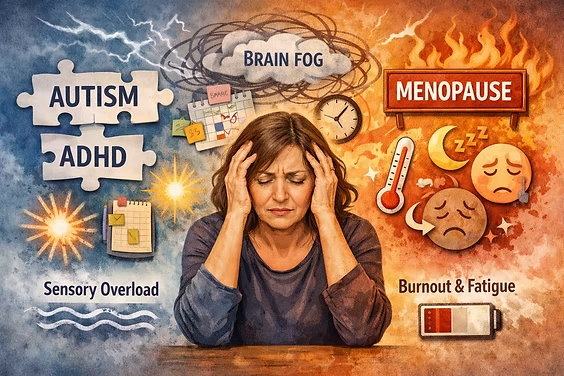
Symptoms of ADHD can also manifest differently with hormonal fluctuations. Brain fog, mood swings, irritability, lack of motivation, difficulty focusing may be more noticeable before periods, after pregnancy or during perimenopause.
Speaking of hormones, they can increase the difficulty of coping with burn-out, although not of alone. As energy, sleep, mood and attention change, one’s coping mechanisms also can become less effective.
If there is a pattern of symptoms occurring every month (or there is a sudden worsening in the midlife), it might be worth keeping a record of symptoms and presenting those to a health care provider.
Emotional Signs of ADHD Burnout in Women
Sometimes ADHD burnout in women can be particularly agonizing. Many women feel not only fatigued, but also as though they are a failure to all.
You might think:
- Why can’t I do normal things?
- You have the words “I used ” in your head.
- Everyone must be mad with me.”
- So behind I’ll never catch up.
- “Gotta get away for a while.”
Burnout is accompanied by shame. However, due to the stigma it imposes on the recovery process, it makes the process harder to complete as it keeps an individual stuck in self-blame instead of support.
But don’t ask, “What is wrong with me?”
That which is: “What have I been carrying without enough help?”
But that is a key question, and that makes all the difference.
ADHD Burnout in Women at Work
Often, work is a major factor in the onset of ADHD burnout, particularly in jobs that require constant attention, rapid responses, emotional regulation, organization and multi-tasking.
If you have these symptoms, you might be suffering from burnout at work:
- Afraid to open a computer
- Miss deadlines despite efforts and caring
- Encounter challenging discussions, particularly at breakfasts and lunches that require a lot of talking
- Have a short attention span and easily distractible
- Try to stay overtly busy to camouflage any difficulties with ADHD.
- Experience hyperactivity and impulsivity in at least two settings (school, home, or another social environment)
- Be inconsistent with progress and productivity
- Don’t get to bed at a reasonable hour and don’t have time to unwind
Many women with ADHD can function well under pressure, but that’s not necessarily good pressure. Surviving chaos shouldn’t mean that you have to live in chaos.
A few simple adjustments at the workplace, such as having written instructions, avoiding consecutive meetings, batching tasks, putting up visual cues, body doubling, flexible scheduling, or project management tools are helpful.
Recovery Tips for ADHD Burnout in Women
Healing ADHD burnout in women is NOT disciplining her all at once. Overload reduction, rebuilding the trust in yourself, and building systems that work with (rather than against) your brain.
Start small. We do not have to get recovery “right” to recover from burnout.
1. Lower the Bar on Purpose
Your normal standard may be too high with your new level of energy when you reach the burnout point.
Attempt to do “minimum viable” versions of tasks:
- Take a shower rather than follow a complete routine.
- Have a simple meal rather than a complicated one
- Be sure to scrub only one surface rather than the entire room
- One sentence reply, rather than long message
- Fill the time with a walk rather than put yourself into a full workout
- Don’t afraid to lower the bar, because that would be low. It is strategy.
Don’t afraid to lower the bar, because that would be low. It is strategy.
2. Create A Burnout-Friendly Routine
An ADHD Burnout routine should be (1) gentle, (2) visible and (3) realistic. Don’t make a day you were really active on the day you made your fantasy routine. Create one for your sore day.
The following is a simple routine that may be included:
- Drink water
- Medication or supplements as prescribed
- Eat a fast food protein breakfast.
- Only select 3 main tasks
- Have one reset break
- Make one night’s super healthy meal
- To set bedtime reminder
It is not to be in control of every minute. The idea is to minimize decision fatigue.
3. Use External Supports
Sometimes information (outside the brain) is easier for ADHD brains to process.
Try using:
- Sticky notes
- Phone alarms
- Visual timers
- Whiteboards
- Shared calendars
- Meal plans
- Reminder apps
- Body doubling sessions
- Pre-written email templates
Using tools is not “cheating”. You’re creating ramps for a brain that isn’t supposed to be climbing up stairs all day long.
4. Stop Using Shame as Motivation
Panic, guilt, and last minute pressures are what many women use to get things done – and in the case of ADHD, this can be a primary method of doing so. It CAN work sometimes, but it is expensive!
Don’t allow yourself to say “I am so lazy”; and say
- Not enough room to perform this task.
- Not clear in starting point.
- I am not broken, I am overloaded.”
- What can I do to make this 10% easier?
Self-compassion is not “excusing” oneself. It usually is the first step towards really changing.
5. Protect Recovery Time
Rest can’t be the crumb that’s left at the end of the day when you are tired, overwhelmed and burned out. It needs to be protected.
Recovery time can take place in the following ways:
- No screens 45 minutes before sleep (at least 15 minutes before lights off)
- A low-pressure walk
- After social gatherings spend time alone
- Developing a better attitude when making choices about lifestyle and friends
- Food delivered to door instead of going out for food
- Taking Mental Health Day if feasible
- Stating “no” to suggestions and requests
Rest isn’t the award for completing all tasks. Rest is within your way of life.
When to Seek Help for ADHD Burnout in Women
If burnout is affecting your work, relationships, health, or ability to manage daily life, support can make a huge difference.
Consider reaching out to a doctor, therapist, ADHD coach, or mental health professional if you are experiencing:
- Ongoing sadness or hopelessness
- Severe anxiety or panic attacks
- Fatigue that doesn’t improve with exercise and rest
- Thoughts of self-harm
- Incapable of taking care of self to accomplish fundamental activities of daily living
- Changes in major sleep or eating habits and/or mood
- Using or abusing of substances to cope
The syndrome of ADHD burnout and the condition of burning out are quite serious, and you cannot do it alone. Professional support is available to discuss the treatment options, accommodation choices, therapy, medication, making lifestyle changes, and practical coping strategies.
Key Takeaways
Women who experience ADHD burnout have a problem that is not their own. It is usually the result of years of pushing through without a lot of information or support or recovery.
You might have been encouraged throughout your life to work harder. Healing can take place if you do things differently.
Take a baby step towards supporting yourself. Lower one expectation. Request a single accommodation. Refugee one commitment. Make one thing more convenient. Allow yourself to heal but not demonstrate its worth.
You are not lazy. You’re not a drama queen. It isn’t a failure.
You’ve had a long day—or let’s just say, tired people need care and not criticism.
FAQs About ADHD Burnout in Women
Q. What is ADHD burnout in women like?
Women experiencing ADHD burnout may find they feel very fatigued, overwhelmed emotionally, have trouble concentrating or completing simple tasks. Many women report experiencing a range of feelings such as feeling stuck, numb, irritable, guilty, or “can’t catch a break.”
Q. Does “burnout” occur for women with ADHD or is it similar to depression?
While there are shared characteristics, ADHD burnout and depression don’t necessarily go together. Chronic overload or stress is associated with burnout, and depression may be characterised by a down or sad mood and a lack of interest for a very extended period. If symptoms are severe or persistent, it’s a good idea to consult with a health care provider.
Q. What is ADHD burnout in females?
There are no set time limits. The duration of ADHD burnout in women can vary from days, weeks, and months and more based on stress, life, support, health, workload, and sleep. The recovery plan typically involves a pressure reduction, some sort of support, and a change of expectations.
Q. Are women experiencing burnout, due to masking?
So, women may be experiencing maskings as a reason for ADHD burnout. Over time, the energy consumed from constantly masking symptoms, pretending an organized person, forcing attention, and attempting to comply with the social expectation can be draining to mental and emotional capability.
Q. Which of the following facilitates a woman with ADHD to overcome the burnout more quickly?
Recovery strategies that help include reducing expectations, keeping things simple, relying on external cues, making sure to get rest, seeking assistance, cutting down on demands, and hiring professionals who are familiar with ADHD. The idea is not to work harder, it is to try to live a less exhausting life.
Q. Does ADHD Burnout in Women worsen prior to the period or during Perimenopause?
Although the symptoms of ADHD are equal all day long, some women see a worsening of the symptoms during their menstruation, after pregnancy or during the perimenopausal period. Keeping a record of them will help you identify the patterns and talk to a health care professional about them.
Q. When suffering from ADHD burnout, women can turn towards a doctor?
Yes, particularly if burnout is impacting on daily functioning, work, relationships, sleep, mood/safety. A health care professional can help to make a diagnosis to rule out other conditions, and also offer treatment, therapy, medication options or lifestyle support strategies.
Read more women related content on our blog.