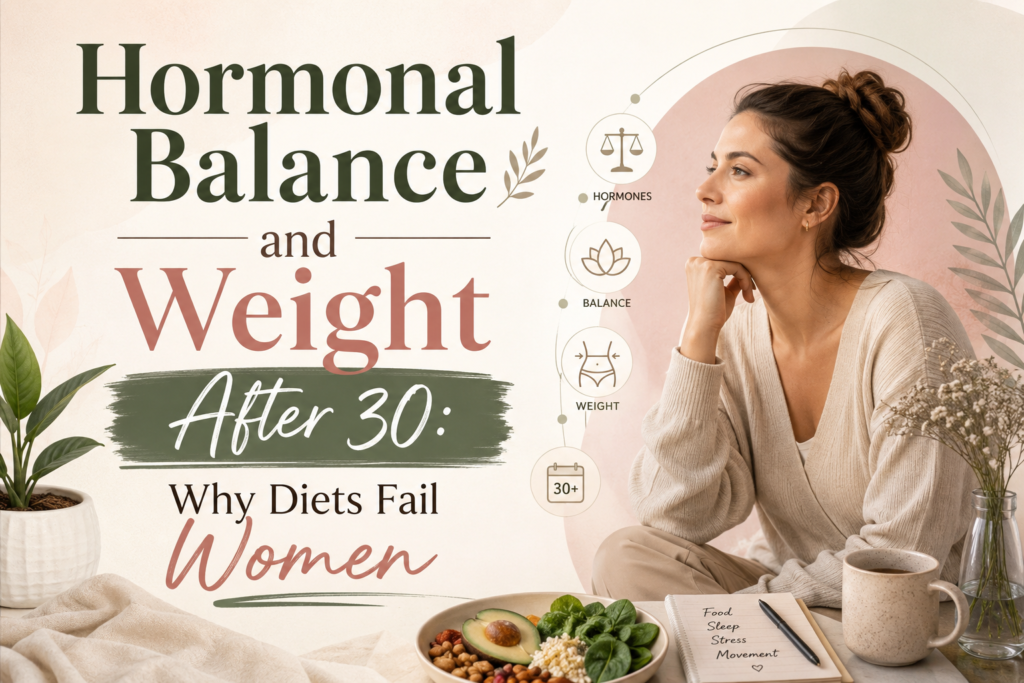
I turned 32 and suddenly nothing fit. Not just my clothes. My entire approach to my body stopped fitting. I was eating the things. Moving the way. Being just as careful as I had been in my 20s.. Yet. Weight I had never carried before was sitting on my midsection like it had signed a lease. Understanding hormonal balance and weight after 30 can help explain why the same diet may not work the way it once did.
I tried cutting carbs. Nothing. I tried eating less. I just felt exhausted and irritable. And tried working out. My body held on tighter. It took me too long to find out what was actually happening.. When I finally did I was equal parts relieved and frustrated. Relieved because it was not my fault and frustrated because nobody had told me sooner.
So here it is. Everything I wish I had known about balance and weight after 30.
Why the Same Diet Stops Working: Hormonal Balance and Weight After 30
In my 20s I could drop five pounds in two weeks if I just cut back a little. Skip the bread go for a walks, done. That version of my body is gone. Hormonal balance and weight after 30 can change the way your body responds to food, exercise, sleep, and stress.
Honestly? It is not coming back. Not because I failed it. Because my hormones changed.. When hormones change the whole game changes with them.
What Actually Helps With Hormonal Balance and Weight After 30
After 30, a few things start shifting. Muscle starts to go. Even if you stay active. Muscle burns calories even while you are sitting still. Less muscle means a slower metabolism, even if your lifestyle looks exactly the same from the outside.
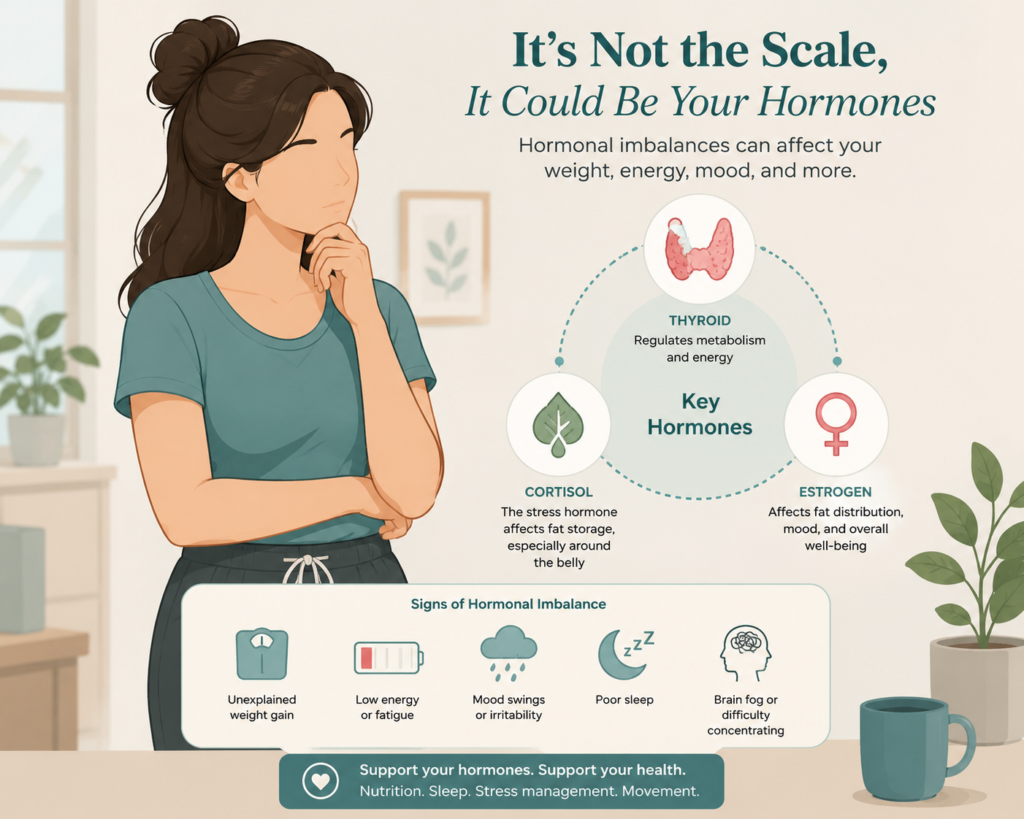
Estrogen starts fluctuating. This is the one that catches women off guard. As estrogen shifts your body changes where it stores fat. The hips-and-thighs pattern of your 20s slowly gives way to belly in your 30s. Not because you ate more. Because your estrogen said so.
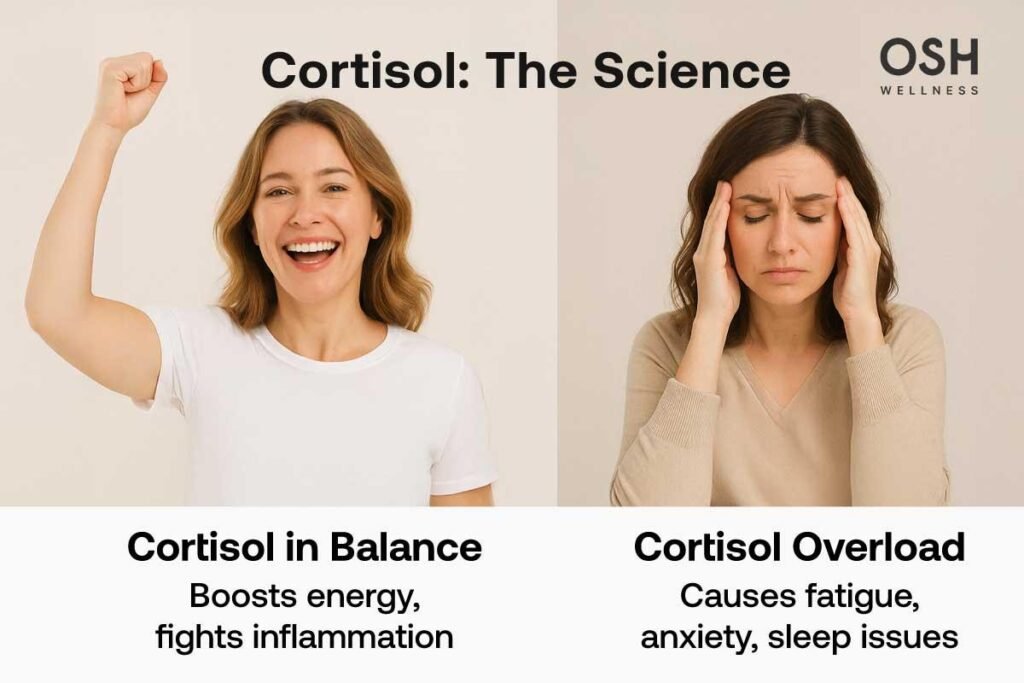
Cortisol gets harder to manage. Life after 30 is more stressful for most women. More responsibilities, more pressure, time to recover. High cortisol is your bodys stress response.. One of its side effects is telling your body to hold onto fat, especially around the middle.
Insulin starts behaving. Your bodys ability to handle carbohydrates changes. The same meal that was fine at 25 creates a blood sugar spike at 35. More spikes mean fat storage, more cravings, more energy crashes.
Sleep gets worse.. This one affects everything else. Poor sleep throws off the hormones that control hunger. You wake up hungrier. You feel less satisfied after eating.. The cycle keeps going.
Why Eating Less Makes It Worse
This is the part that took me the longest to accept.
When your hormones are already out of balance restricting food makes things harder. Not easier. Cutting calories signals stress to your body. Stress raises cortisol. High cortisol slows your metabolism. Increases fat storage.
So the harder you diet the more your body fights back. It is not stubbornness. It is biology.
The Real Role of Hormones in Weight
I am not a doctor.. After going through this myself and spending a long time reading and talking to people who actually understand this stuff. Here is how I now think about it.
Hormones are like a communication system inside your body. They tell your organs what to do, when to do it and how urgently. When they are all talking to each other clearly things run smoothly. When one of them goes quiet or starts shouting. The whole system feels it.

Estrogen
Estrogen does not just affect your periods. It affects your metabolism your mood, your sleep and where your body stores fat. When it starts shifting in your 30s belly fat becomes harder to avoid. Not impossible, but harder.. No diet that ignores estrogen is going to fully address it.
Cortisol
I think of cortisol as the hormone that turns your body into a hoarder. When it is high. Which it is for stressed, busy women in their 30s. Your body hoards fat, particularly around the belly. It also drives you toward sugar and processed carbs because your brain wants energy when it feels under threat.
Chronic stress and hormonal weight gain in women are directly linked. This is not eating. This is chemistry.
Insulin
When insulin sensitivity drops. Which it does gradually after 30 with disrupted sleep. Your body handles carbohydrates less efficiently. Blood sugar swings become more dramatic. You feel more often and your body is quicker to store what you eat as fat rather than use it for energy.
Thyroid
This one often gets missed. Your thyroid controls how fast your metabolism runs. However, mild underactivity can sometimes fall within the edge of a “normal” range. As a result, weight loss may feel genuinely difficult. For example, hair thinning, feeling cold, fatigue, and stubborn weight together may be worth discussing with your doctor and asking whether a full thyroid panel is appropriate.

Sleep Hormones. Leptin and Ghrelin
Leptin tells you when you are full. Ghrelin tells you when you are hungry. Bad sleep lowers leptin. Raises ghrelin at the same time. You wake up hungrier eat more feel less satisfied. And wonder why you have no willpower.
You have plenty of willpower. You just have dysregulated hunger hormones from sleep. According to research from the National Institutes of Health even partial sleep loss significantly increases appetite. For high-calorie foods. It is that measurable.
What Actually Helps (Food, Sleep, Stress, Movement)
When I stopped trying to diet my way through a hormone problem, things started to shift. Here is what actually made a difference.
Food: Stop Restricting. Start Stabilizing.
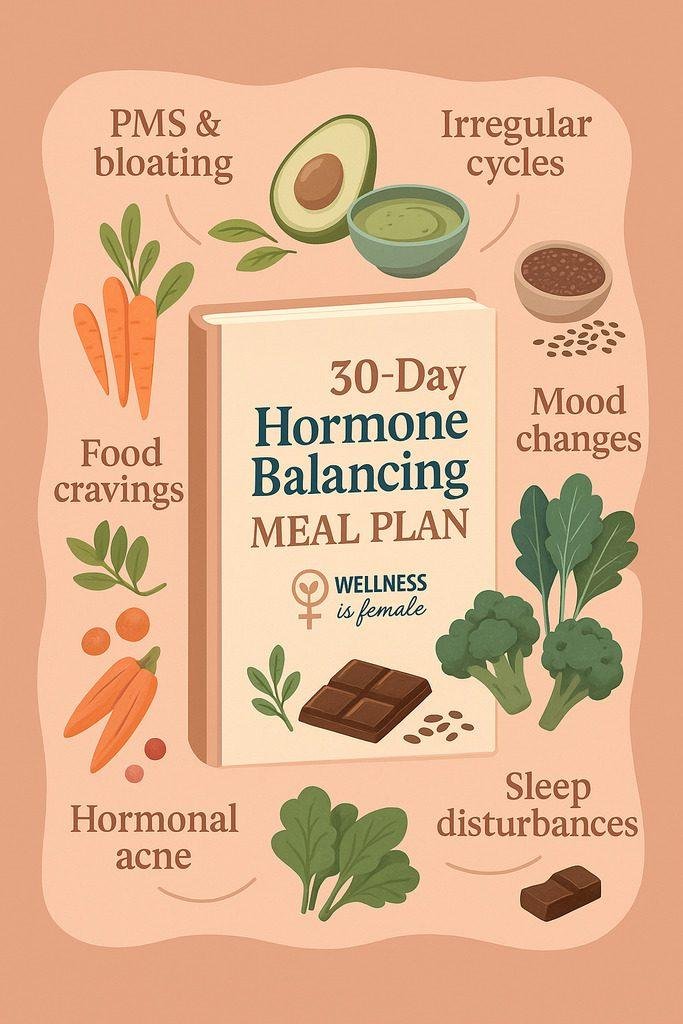
The goal I started working toward was not eating less. It was keeping my blood sugar, cortisol, and insulin as steady as possible throughout the day. Food can play an important role in supporting hormonal balance and weight after 30.
Protein became non-negotiable. Eggs in the morning. Some form of protein at lunch and dinner. It kept me full kept my blood sugar steady and over time helped me hold onto muscle mass.
I stopped skipping meals. I used to think skipping lunch was helping. It was not. Skipping spiked my cortisol tanked my blood sugar by 3 PM. Made me eat twice as much at dinner.
I cut back on processed sugar. Not obsessively. The blood sugar spikes and crashes were driving my cravings. Reducing them not eliminating them made the cravings much quieter over time.
I started eating fat. Avocado, olive oil, nuts, oily fish. This felt backwards at first.. Your body actually needs fat to produce hormones. Low-fat dieting can quietly worsen imbalance.
More fiber, less restriction. Vegetables, legumes, grains. These support gut health. Help your body process estrogen properly. I noticed a difference.
Sleep: I Treated It Like Medicine
I used to treat sleep as optional, something I would catch up on at weekends. However, that stopped. Instead, seven to eight hours became a priority, not a luxury. For example, I kept the same bedtime each night, put my phone out of the bedroom, kept the room dark, and avoided caffeine after 2 PM.
As a result, within a few weeks, my cravings dropped noticeably. My energy was more stable, and I did not feel like I was fighting my appetite all day. For more ideas, this guide on building a morning routine that sets the tone for your whole day is worth reading. After all, how you start the morning can affect your cortisol throughout the day.
Stress: I Started Taking It As a Physical Problem
This was the hardest shift for me. I had always thought of stress management as something like bubble baths and breathing exercises. Not real medicine.
Cortisol is real. Chronically high cortisol is directly connected to belly fat, cravings, poor sleep, and hormonal weight gain in women. Managing stress is managing your hormones. A ten-minute walk outside genuinely lowers cortisol. This is not motivational-poster advice it is physiology. Saying no to things that drain you is a health decision. Rest is not earned. It is necessary.
If you want to understand more about how stress shows up in women’s bodies, this is a helpful starting point.
Movement: I Stopped Punishing Myself With Cardio
For years, I believed more cardio was the answer. So, I pushed myself to run harder, burn more, and keep going. However, what I did not know was that intense cardio raises cortisol. For a woman already dealing with stress and poor sleep, more high-intensity exercise could add even more strain. Instead, what actually helped was:
Strength training changed everything. Two to three sessions a week. Nothing extreme. Consistent progressive lifting. Over time, it built muscle and improved my insulin sensitivity. Made my metabolism feel like it was working again.
Walking became a habit. Not as punishment. Just as part of my day. It lowered my cortisol helped my blood sugar and was something I could actually sustain.
On high-stress weeks I chose yoga over running. This felt like giving up at first. Now I understand it as working with my body of against it.
Strength training and walking can support hormonal balance and weight after 30 while helping maintain muscle.
When to See a Doctor
I want to say this lifestyle changes matter.. Sometimes they are not enough on their own. And recognizing when to get medical support is not weakness. It is good sense.
Signs That You Need a Check-Up
Please do not dismiss these as getting older:
- Weight that keeps increasing despite genuinely healthy habits
- Fatigue that does not improve no matter how much you rest
- Hair thinning or noticeable loss
- Periods that have changed. Heavier lighter irregular
- Feeling cold all the time when others are not
- Low mood or anxiety that feels physical rather, than circumstantial
- PMS that has gotten significantly worse
What to Actually Ask For
Do not just accept a panel. Be specific:
- Full Thyroid panel. TSH, Free T3, Free T4 and thyroid antibodies
- Fasting insulin and fasting blood glucose
- Estrogen, progesterone, testosterone
- Cortisol. A saliva test across four points in the day gives a far more complete picture than a single blood draw
- Vitamin D and B12
You are allowed to advocate for yourself. If your results come back “normal” but you still feel terrible. That conversation is not over.
For more on building health habits alongside any medical support you are getting our women’s health section has practical, no-nonsense guides.

Are AI Nutrition Apps Accounting for Hormones?
Most nutrition apps still follow a simple approach: eat less, move more, and track the numbers. However, they often miss the bigger picture. For example, they may not consider where you are in your cycle, how stress has affected your cortisol levels, or whether you have been sleeping poorly for weeks. In addition, they cannot fully account for thyroid changes that may affect your weight and energy.
Some apps in 2026 are starting to integrate cycle tracking and sleep data. Flo has expanded into nutrition guidance, and wearables like the Oura Ring now give readiness scores that factor in recovery. These are signals. I want to be honest with you. No app replaces a hormone panel. No algorithm knows your body the way a good doctor can. Should. Use these tools to spot patterns, build consistency, and stay accountable. Just do not mistake tracking for treating.
FAQs
Not every single woman,. It is far more common than most people talk about. The hormonal shifts after 30 are real and measurable. The women who navigate this best are usually the ones who adjust their approach than keep pushing the same methods harder.
Both elevated cortisol and fluctuating estrogen push fat toward the abdominal area. This type of fat is also metabolically active. It influences hunger hormones. Drives inflammation. More cardio and less food rarely fixes it. Stress reduction, sleep and strength training work far better.
Food is genuinely powerful. Stabilizing blood sugar reducing inflammation and eating fat and protein all support hormonal health.. Most women after 30 need more than food changes alone. Sleep, stress, movement and sometimes medical support are all part of the picture.
Push back. Ask for a thyroid panel, not just TSH. Ask about fasting insulin. Bring a written list of every symptom you have been experiencing. How long it has been going on. “Normal” on a panel does not always mean everything is functioning optimally. You deserve an investigation.
Strength training and consistent walking are the two most evidence-backed forms of movement for women navigating hormonal shifts after 30. Both improve insulin sensitivity, support muscle mass and help regulate cortisol. Without spiking stress hormones the way intense daily cardio can.
Final Thoughts
I spent time thinking I just needed to try harder. Eat less. Push through. Have discipline. Be more consistent. None of it was the answer because none of it was addressing the actual problem. The diet was not failing because I was weak. It was failing because it was designed for a body I no longer had. Once I understood that. Really understood it, not intellectually, but in the choices I made every single day. Things started to change. Slowly. Imperfectly.. Genuinely.
If you are in that place right now I want you to hear this: you are not broken. You are not lazy. You are a woman in her 30s whose hormones have shifted and whose body is asking for a different kind of care than it needed before. Give it that care.. If something still feels wrong after all of it. Please get proper testing done. Fight for answers. You deserve them.
Share this with a woman who has been blaming herself for something that was never her fault. And find honest practical health content in our Health section.
Note: This is not advice. Please speak with a healthcare provider about anything related to hormonal health or diagnosis.