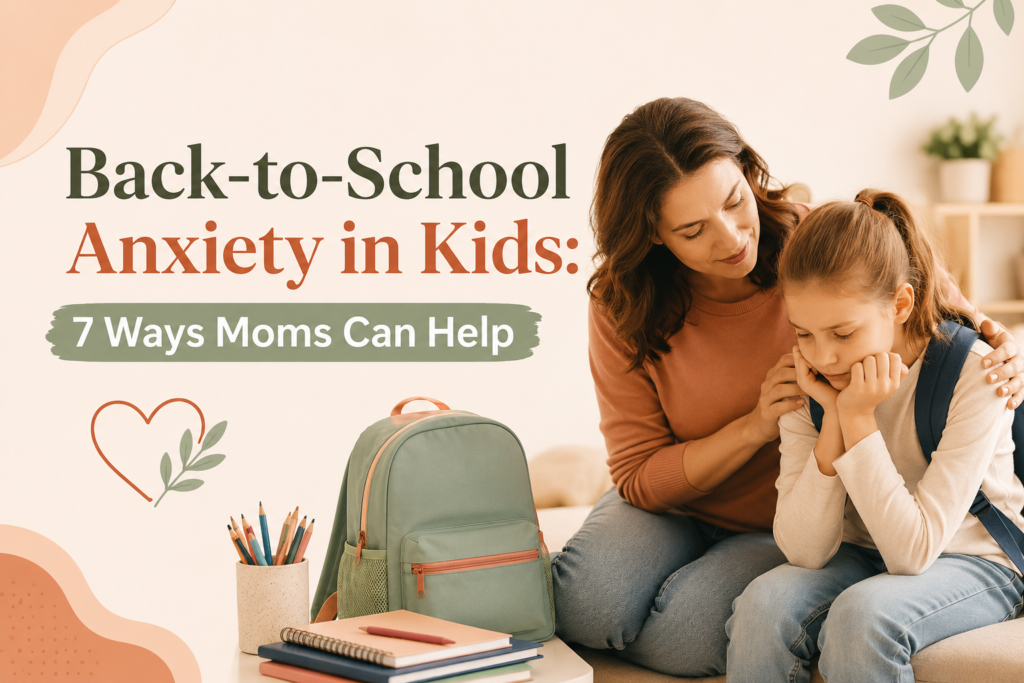
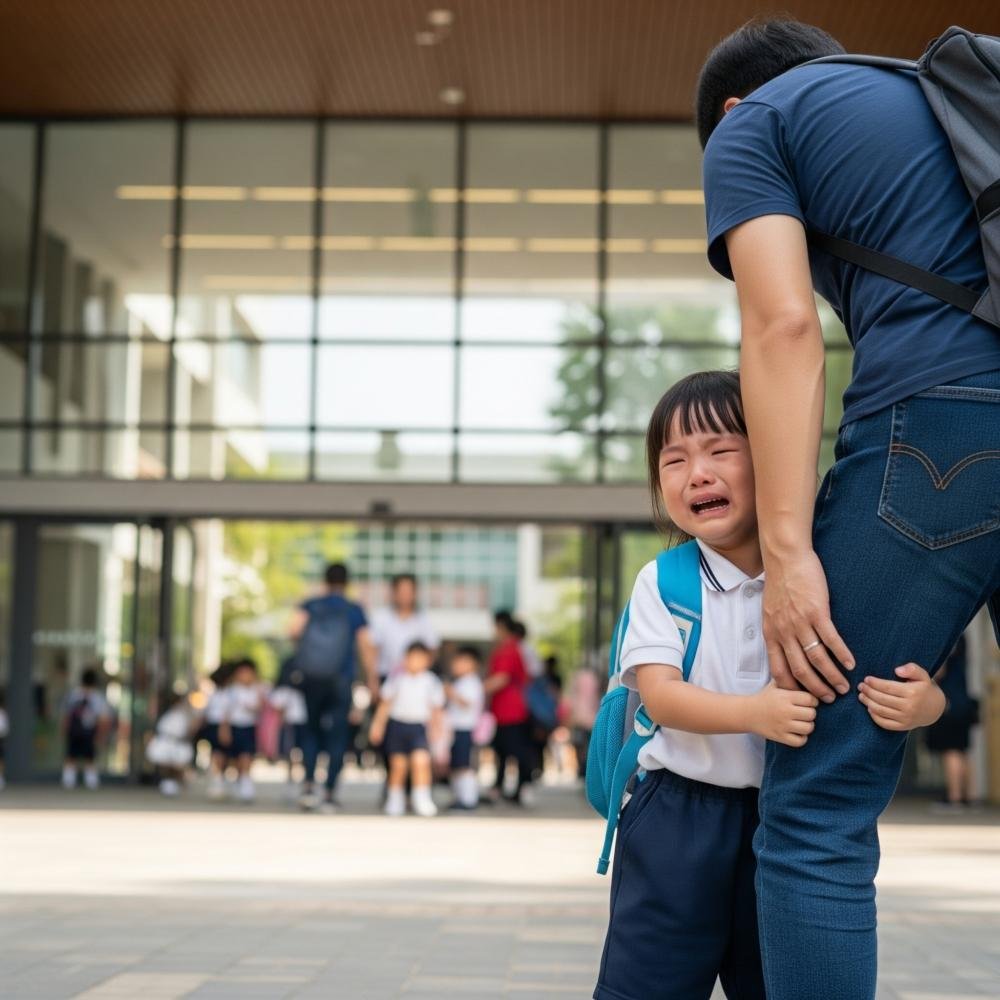
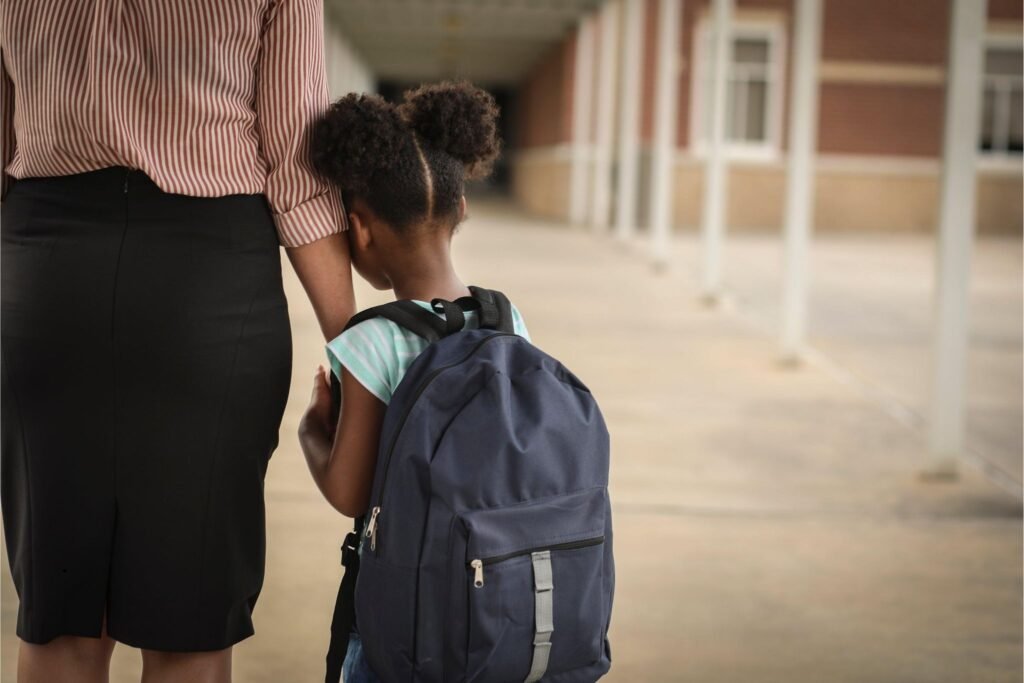
The backpack is packed. The new shoes are by the door. But your child? They’re clinging to you. Stomachache at 7 AM. Tears before the bus even arrives. Or just going very, very quiet which somehow feels worse. Back-to-school anxiety in kids is real. It’s not drama or bad behavior. Your child’s body may simply be reacting to a new or unfamiliar situation, and that can show up in ways many moms don’t expect.
This guide covers what to look for, what to say, and exactly how to help without losing yourself in the process. If the stress is hitting your body too, read about how stress affects women physically because your nervous system matters just as much as your child’s.
Is It Normal Nerves or Real School Anxiety?
Some pre-school nervousness is completely healthy. It means your child cares about what’s coming. It usually fades within the first week once routines settle in.
Real school anxiety is different. It doesn’t fade. It often gets worse.
Here’s how to tell them apart:
| Normal Nerves | Real Anxiety |
| Lasts a few days | Lasts for weeks |
| Your child can usually be reassured | Reassurance doesn’t seem to help |
| Goes to school eventually | Refuses school or has daily meltdowns |
| Occasional mild physical complaints | Frequent stomachaches or headaches |
| Can talk about their worries | Completely shuts down or struggles to talk |
If your child is consistently in that second column — you’re not dealing with jitters. You’re dealing with something that needs more intentional support. And that’s okay. It’s also very fixable.
Signs to Watch For in Different Age Groups
Back to school anxiety in kids doesn’t look the same at every age. Here’s what to watch for:
Little Kids (Ages 4–7)
- Crying or tantrums at drop-off every single day
- Sudden clinginess, even at home
- Bedwetting or sleep changes that weren’t there before
- Stomachaches or headaches with no medical cause
- Constant “what if” questions — what if you forget to pick me up?
Elementary Age (Ages 8–11)
- Avoiding all talk about school
- Trouble sleeping the night before
- Frequent trips to the school nurse
- Saying “I hate school” without being able to explain why
- Losing interest in things they used to enjoy
Tweens and Teens (Ages 12+)
- Withdrawing from friends
- Excessive worry about grades or fitting in
- Irritability that spikes around school time
- Asking to stay home more than once a week
- Mood swings that appear Sunday evening like clockwork
One thing all ages share: they usually can’t explain why they feel the way they do. Your job isn’t to fix the feeling immediately. It’s to make them feel safe enough to have it.
What Moms Can Actually Say and Do
Here are 7 practical ways to ease back to school anxiety in kids — with real words you can use.
1. Start the Conversation Before School Starts
Don’t wait for first day of school anxiety to hit. Bring it up a week early — casually, over dinner or in the car.
Say: “I know the first few days can feel a little weird. Is there anything on your mind about going back?”
Then listen more than you talk. The goal isn’t to solve anything. It’s to open the door.
2. Name the Feeling for Them
Young kids don’t have vocabulary for anxiety. Help them by naming it.
Say: “It sounds like your tummy feels nervous. That happens to a lot of people when something new is starting — even grown-ups.”
When a child knows their feeling has a name and is normal, it immediately becomes less scary.
3. Validate Without Over-Reassuring
Two common mom mistakes:
- “You’ll be fine, stop worrying” — dismisses the feeling
- “Are you sure you’re okay? Are you really sure?” — amplifies it
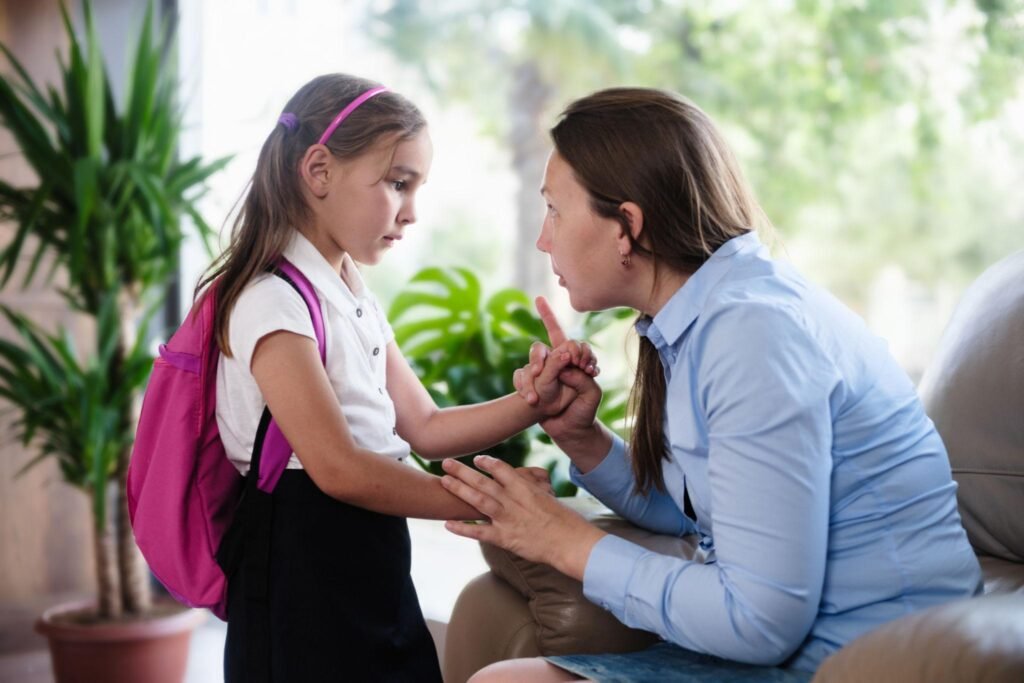
Instead say: “I hear you. And I know you can handle this — even when it feels hard.”
This validates the difficulty and communicates confidence in your child — without making empty promises.
4. Create a Goodbye Ritual
A consistent, short goodbye ritual reduces drop-off anxiety — especially for younger kids. It doesn’t need to be elaborate.
Try: a special handshake, three squeezes, a forehead kiss, or a simple phrase every morning — “I’ll be here at 3. I love you. Go be great.”
Predictability is calming. When kids know exactly how goodbye goes, it feels less like a cliff and more like a step.
5. Give Them One Thing to Look Forward To
Anxiety focuses on worst-case outcomes. Gently redirect that by anchoring them to something small and good.
Say: “Is there even one thing you’re a little excited about? Art class? Seeing your friend?”
Even if they struggle to answer, the question plants a seed — teaching the brain to look for both the hard and the hopeful.
6. Practice What Worries Them
If your child is anxious about something specific — lunch, getting lost, raising their hand — practice it at home. Role-play it together. Keep it low-stakes, even a little silly.
The goal is to build a small sense of competence around the scary thing before it’s real.
7. Loop in the School Early
If anxiety is severe — daily refusal, physical symptoms every morning, significant mood changes — talk to the school counselor early. Don’t wait for a crisis.
Small accommodations make a big difference. A seat near the door. A calm corner pass. A check-in with the counselor each morning. Schools are more equipped for this than most parents realize.
For deeper guidance on school refusal, the Child Mind Institute (childmind.org) has one of the most trusted, research-backed resources available
Managing Your Own Back-to-School Stress as a Mom
Here’s what nobody says out loud: back-to-school season is exhausting for moms too.
The mental load doubles overnight. New schedules, new teachers, new forms — while also managing a child who is falling apart every morning. That’s a lot. And it’s okay to name that.
A few things that actually help:
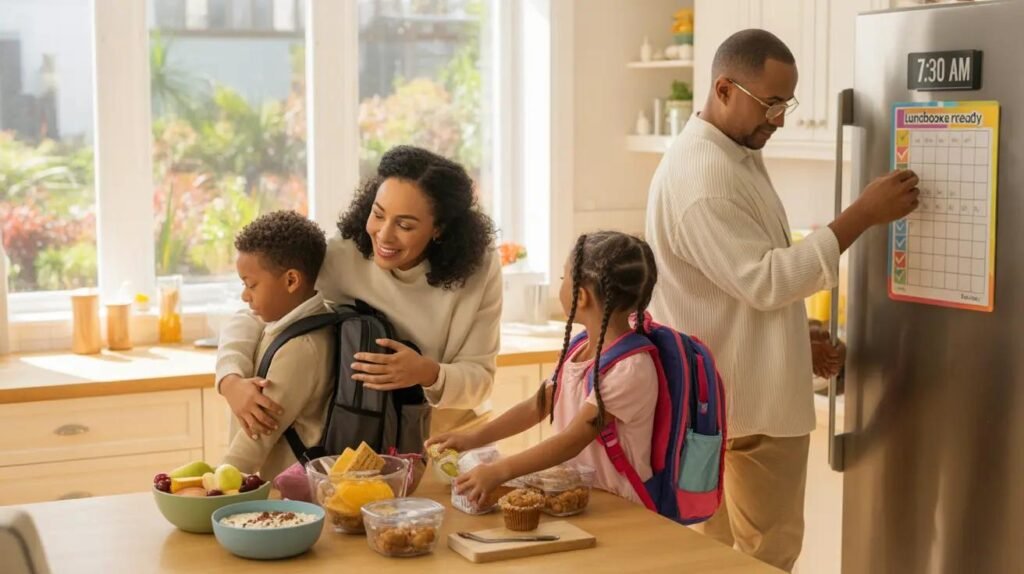
- Prep the night before — every night. Bags packed, lunches made, clothes laid out. Morning chaos is anxiety fuel for everyone.
- Build in 10 extra minutes for the first two weeks. Rushing is contagious — kids feel your stress immediately.
- Have one thing that’s yours. Even 15 quiet minutes before the house wakes up. A walk. A coffee. Something that signals to your nervous system that you exist outside of being “mom.”
- Talk to someone. Another mom, a friend, your partner. You don’t have to be calm 100% of the time behind closed doors.
You can’t pour from an empty cup. Your child needs a regulated mom more than a perfect one. For practical self-care ideas that actually fit a busy schedule, explore simple wellness habits for moms.
Using AI Planning Apps to Simplify School-Year Logistics
Back-to-school admin is relentless. In 2026, more moms are using AI tools to manage the mental load — not to parent better, but to think less about the logistics so they can be more present for what matters.
Here’s how moms are using AI this season:
- Building weekly meal plans around school schedules and picky eaters — in minutes
- Creating morning routine checklists for kids that are visual and age-appropriate
- Drafting emails to teachers when they’re unsure how to raise a concern
- Organizing extracurricular schedules and spotting conflicts automatically
- Generating conversation starters tailored to an anxious child’s age and specific worry
Tools like Notion AI, Google Gemini, or a general AI assistant can handle all of this in under five minutes. The goal isn’t to outsource parenting — it’s to outsource the parts that don’t need your heart, so your heart has more to give.
Want to build a morning routine that sets a calmer tone for everyone? A simple morning routine for moms is a great place to start.

FAQs: Back-to-School Anxiety in Kids
For most kids, normal nerves settle within 1–2 weeks. If anxiety continues beyond two weeks or gets worse, speak with your child’s teacher, school counselor, or pediatrician.
Occasionally, a mental health day is fine. But regularly allowing school avoidance makes anxiety worse over time. Avoidance teaches the brain that school is something to be feared. The goal is to support your child in going not to eliminate the discomfort entirely.
Don’t force a direct conversation. Instead, talk side by side — in the car, on a walk, while cooking. Kids open up more when they don’t feel directly watched. Try: “What’s one thing that’s kind of annoying about going back?” It’s easier to answer than “Are you anxious?”
If your child is refusing school entirely, experiencing daily physical symptoms with no medical cause, or anxiety is affecting their sleep, eating, or friendships talk to a pediatrician or child therapist. There is no such thing as asking for help too soon.
Absolutely. Tweens and teens experience it differently — more social anxiety, fear of judgment and academic pressure, but it’s just as real. The signs are subtler, which makes it easier to miss. Watch for mood shifts, isolation, and Sunday-night dread that doesn’t let up.
Final Thought
Your child is not broken. And neither are you. Back-to-school anxiety in kids isn’t a sign of bad parenting or a “difficult” child. It’s often your child’s way of responding to something new, uncertain, or overwhelming—and letting you know they need a little extra support.
Some mornings will be tough. Some drop-offs will be harder than others. That doesn’t mean you’re doing something wrong. That’s simply part of parenting. With the right words, a little planning, and the confidence to ask for help when you need it, you and your child can get through these challenging moments together. Things will get easier, one morning at a time.
Found this helpful? Share it with a mom who might need a little extra support this August, and explore more honest parenting reads in our Parenting section.
Note: This article is for informational purposes only and does not replace professional medical or mental health advice. If your child’s anxiety feels severe, continues to worsen, or starts interfering significantly with daily life, talk with your child’s doctor or a licensed mental health professional.