
If you’ve recently been browsing prenatal vitamin labels, or reading online forums about prenatal nutrition, you’ve no doubt come across the folic acid vs methylfolate debate.
Should you be taking folic acid, methylfolate, or something else entirely?
The issue seems to be hotly debated both in pharmacies and on social media, with many websites claiming that methylfolate is clearly superior to folic acid during pregnancy.
Let’s cut through the noise and discuss what the fuss is really about.
(As a disclaimer, this is not medical advice; please consult your physician before making any changes to your prenatal vitamin regiment.)
What Is Folic Acid?
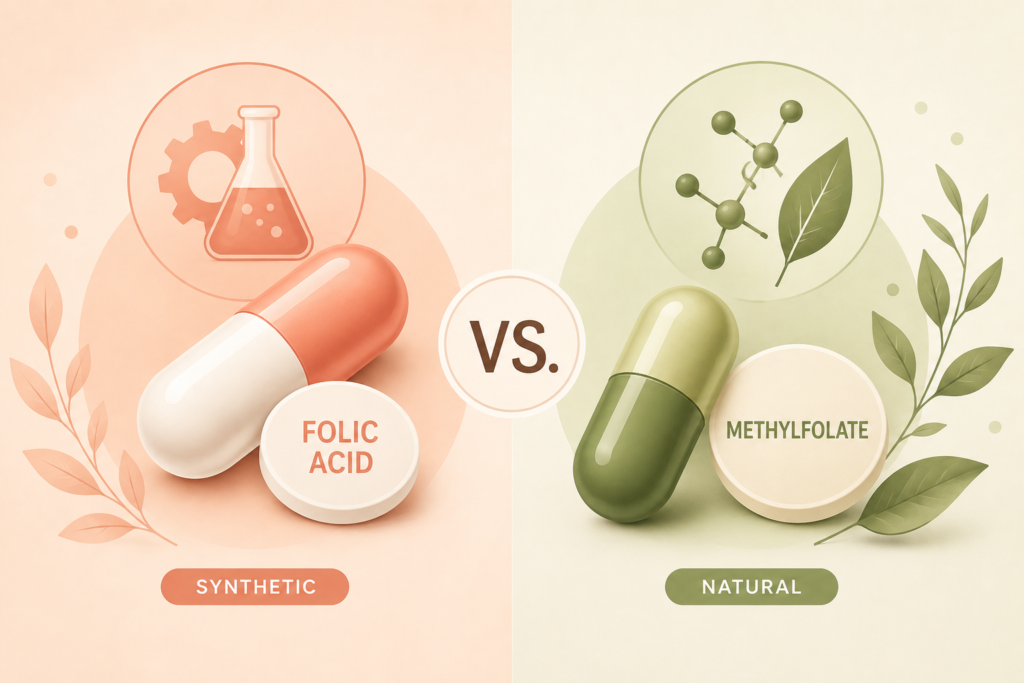
Folic acid is the synthetic form of folate (or vitamin B9).
It’s the form that is typically added to food, like enriched grains, and it’s the most common type found in prenatal vitamins.
It has a strong research backup, and is endorsed by medical institutions worldwide.
It’s also been in use since the 1990s, when it was found to dramatically reduce the risk of birth defects when taken before and during pregnancy.
The main “drawback,” however, is that the body cannot use it in its original form, and must undertake a conversion process to make it usable.
What Is Methylfolate?
Methylfolate (also called L-methylfolate and 5-MTHF) is the naturally-occurring form of folate, and the form your body recognizes and uses right away.
Unlike folic acid, it doesn’t need to be converted by the liver and kidneys, and some argue that it’s a safer option with better bioavailability.

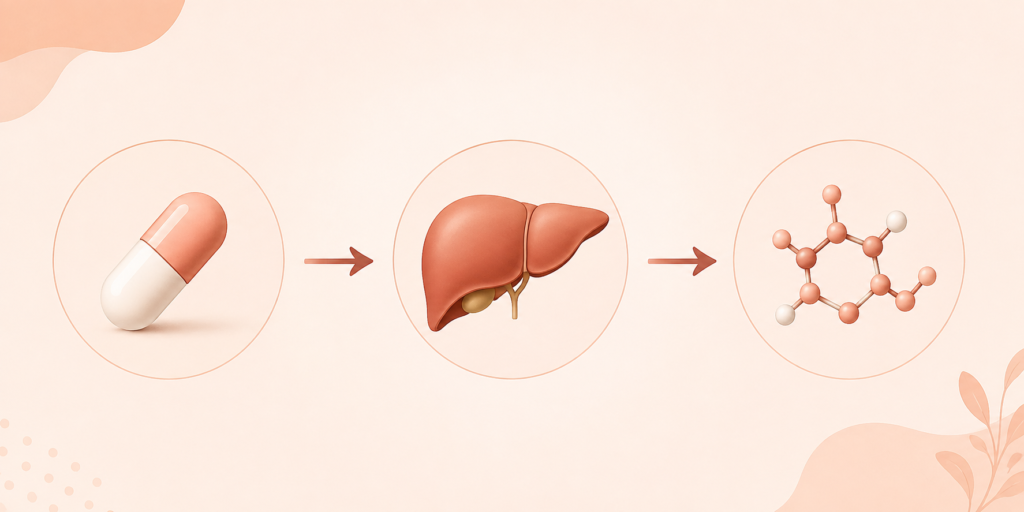
How Does Your Body Convert Folic Acid To Usable Folate?
As mentioned above, folic acid needs to be converted to 5-MTHF in the liver in order to be used by the body.
This conversion process relies on a certain enzyme in the body, which is why it cannot be done by everyone. There are certain genetic variations (MTHFR gene mutations) that prevent this conversion process from happening correctly and completely, resulting in a build up of unmetabolized folic acid in the blood.
What Is the MTHFR Gene?
The MTHFR gene creates the enzyme that catalyzes the reaction that converts folic acid to 5-MTHF.
There are several variations of this gene (commonly called MTHFR C677T and A1298C mutations) which are associated with negative effects on the body’s ability to process folate and utilize it.
Quick signs some women wonder if they should get tested for MTHFR:
- Miscarriage, particularly with a history of recurrent losses
- Neural tube defects, particularly if there is a history of it in your family
- Fatigue and other unexplained symptoms when folate levels are low
- Your doctor or fertility specialist recommending it based on your health history
Having an MTHFR gene mutation is normal and not rare at all, and while it can cause some pregnancy complications, many women with these mutations have healthy, normal pregnancies.
Folic Acid vs Methylfolate – Side-by-Side Comparison
| Factor | Folic Acid | Methylfolate |
| Source | Synthetic | Bioactive/active form |
| Needs conversion in the body? | Yes | No |
| Found in fortified foods | Yes | No |
| Research backing for preventing neural tube defects | Extensive, decades of data | Still growing |
| Recommended by CDC/ACOG | Yes | Not as a replacement |
| Best suited for | Most pregnant women | Women with MTHFR variants (per some emerging research) |
| Cost | Generally lower | Generally higher |
Is Methylfolate Actually Better During Pregnancy?
Before looking at the proposed guidelines, let’s examine the rationale for prioritizing methylfolate over folic acid. There are three primary arguments in support of the recommendation:
1. Methylfolate is easier on the body to process
Due to its “pre-converted” status, methylfolate does not require the same hepatic conversion that folic acid does to become methyltetrahydrofolate. This is an important consideration, given the increased physiologic stress on a pregnant woman’s body. Essentially, methylfolate is a “quick” source of folate for the body, which is already working overtime to meet the needs of two people.
2. It is beneficial for individuals with an MTHFR gene defect
This genetic predisposition essentially renders one’s ability to convert folic acid down to methyltetrahydrofolate significantly impaired (by as much as 70%). Because methylfolate requires no conversion, it is seen by many physicians and fertility clinics as a preferable option, both for conception and throughout pregnancy, for women with this issue.
3. Same mechanism, different timing – but still effective
Methylfolate still has the same basic mechanism of action as folic acid, just beginning the process at an earlier point. By supporting the methylation cycle, it assists in the production of healthy neural tissue, including the spinal column and brain – all of which are critical during the earliest parts of pregnancy. As such, it plays a key role in preventing birth defects like spina bifida and anencephaly.
Is Folic Acid Still Safe? (The Other Side of the Debate)
Although it may have some theoretical advantages, the use of folate is unlikely to displace folic acid in the near future, and here’s why:
Summary of current clinical guidelines: As it stands, reputable medical institutions are advocating for the continuation of folic acid as the supplement of choice for pregnancies with increased risk of neural tube defects, due to the long-standing body of evidence directly linking it to decreased rates of said complications. The use of methylfolate in women with suspected MTHFR polymorphism is not broadly endorsed, as there is, as of now, no conclusive evidence of it being significantly beneficial over folic acid
Description of emerging evidence: Several small-scale trials have been made trying to establish superiority of methylfolate in women with MTHFR polymorphism, and those with history of recurrent pregnancy loss, with mostly inconclusive results: some suggested that it had beneficial impact on serum folate concentration, but the connection to improved pregnancy outcomes was not established.
Your takeaway: As a supplement, folic acid has demonstrated its ability to be safe and effective, and is largely endorsed by medical professionals, while methylfolate’s benefits are largely hypothetical, save for the specific medical circumstances, that may be advised by your physician.
What About Unmetabolized Folic Acid (UMFA)?
Some women wonder if unmetabolized folic acid (UMFA) from food and supplements is dangerous and may cause birth defects or other problems. Research into this area is ongoing, and the long-term effects of UMFA are not yet fully understood, but UMFA is not officially classified as harmful.
This makes it a topic of debate among doctors, and something you should certainly discuss with your doctor when making your decision.
How Much Folate Do You Need During Pregnancy?
Before conception: At least 400 mcg of folate per day (ideally, you should begin taking it a month before you start trying to get pregnant)
During pregnancy: 400-600 mcg of folate per day throughout your pregnancy, up to and including the first trimester (most doctors will continue it during the second and third trimester)
High-risk pregnancies: If you’ve previously had a pregnancy with a neural tube defect or you’re pregnant with high risk factors, your doctor may recommend that you take prenatal vitamins with much higher folate content.
When it comes to folate, the most important thing is to take it regularly (ideally, a month before you become pregnant and throughout your first trimester), since your body needs it to develop your baby’s neural tube correctly and on time.
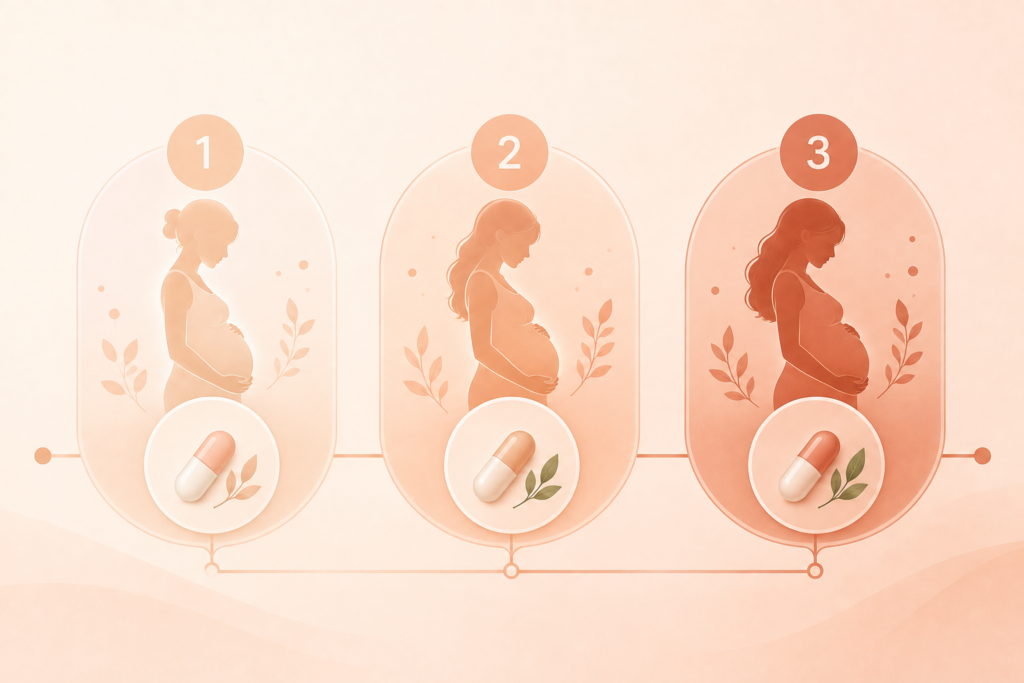
Folic Acid Dosage by Trimester
The amount of folate needed by the body changes throughout pregnancy. Below is a simplified guide to how much you should take at what point in your pregnancy. Please remember to consult your doctor about the right dose for you as every woman’s needs are different. This is a general overview only.
Right before conception
400 mcg per day, taken at least one month before conception
The neural tube starts to develop long before most women know they are pregnant, making it one of the most crucial times to take folic acid
First trimester
400-600 mcg per day
The fetal neural tube closes at 6 weeks gestation, which is why the first trimester is the most critical time for preventing birth defects. At this point, it’s even more important to focus on the dose rather than the type of folate (acid vs methylfolate)
Second trimester
600 mcg per day
As the fetus grows, so do the demands for folate, and your blood volume increases as well
Third trimester
600 mcg per day, possibly more as recommended by your doctor
Folate is still needed for the production of red blood cells for both you and your baby, and can prevent folate deficiency anemia
Women with a history of spina bifida, those on anti-seizure medications, and those with other medical conditions may need to take up to 4,000-5,000 mcg of folic acid as prescribed by their doctor
Now that you know the basic ranges for folic acid during each trimester, let’s discuss what to do if you’re still unsure what’s right for you. There is a lot of conflicting information about which type of folate is better, at what time to start taking it, and whether genetic testing is necessary to determine which type to take.
How to Decide What’s Right for You
With so much conflicting information online, the real answer isn’t “folic acid” or “methylfolate” in isolation it’s knowing which questions to ask and when testing actually makes sense.
Questions worth asking your doctor:
- “Based on my health history, is my current prenatal vitamin’s folate form sufficient?”
- “Do I have any risk factors that would justify MTHFR testing?”
- “If I have an MTHFR variant, would you recommend adjusting my supplement — and by how much?”
- “Am I getting extra folic acid from fortified foods on top of my supplement, and could that add up?”
- “Are there any signs of folate deficiency I should watch for during pregnancy?”
Do you actually need an MTHFR test? For most healthy women with no complications, routine MTHFR testing isn’t recommended by major medical guidelines — it doesn’t change standard prenatal care for the majority of people. However, it may be worth discussing testing if you have:
- A history of two or more unexplained miscarriages
- A family history of neural tube defects
- Unexplained, persistent fatigue or elevated homocysteine levels despite adequate supplementation
- A fertility specialist already investigating recurrent pregnancy loss
If testing does show an MTHFR variant, it still doesn’t automatically mean you need methylfolate — it simply gives you and your doctor more complete information to make an informed, individualized decision together.
What Are Good Food Sources of Folate?
If you want to get extra folate in your diet, you can add the following foods to your meal plan:
- Dark leafy greens
- Lentils and beans
- Avocados
- Citrus fruits
- Asparagus
- Eggs
- Fortified cereals, bread, and pasta
Liver (in moderation, and only if it’s recommended by your doctor)
What Are Common Mistakes Women Make Regarding Folic Acid?
- Waiting until a positive pregnancy test to start: by then, the neural tube may already be forming.
- Assuming more is automatically better : high doses should only be taken under medical supervision.
- Switching to methylfolate without discussing it with a doctor: especially if already stable on folic acid.
- Ignoring food fortification : many people unknowingly get folic acid from bread, cereal, and pasta on top of their supplement.
- Skipping doses: once morning sickness sets in, instead of asking a doctor about alternatives (like gummies or a different time of day).
So, What Should I Take During Pregnancy – Methylfolate or Folic Acid?
The short answer is: it depends.
- If you’re completely healthy, and you don’t have any history of pregnancy complications or a genetic predisposition to MTHFR gene mutations, folic acid is definitely the better option.
- On the other hand, if you have a history of pregnancy complications and/or an MTHFR gene mutation, you should consult your doctor and ask them if methylfolate is a better option for you.
- In both cases, you should not make any decisions on your own – always consult your doctor before making any changes to your prenatal vitamin.
FAQs
It is possible to take both, however you need to consult your doctor before doing so, in order to make sure you’re not getting an overdose of either.
Most women do not need to get their MTHFR gene tested before getting pregnant, unless they have a history of recurrent pregnancy losses or other complications.
Yes, it is safe to take during pregnancy, but you should only take it in recommended dosages, as advised by your doctor.
It is possible to get too much folic acid, and that may be harmful to your developing baby.
Some doctors do recommend methylfolate during pregnancy, because it is easier on the body and does not need to be converted before being used.
The most critical time for folate is before conception and during the first trimester, due to the development of the neural tube in your baby.